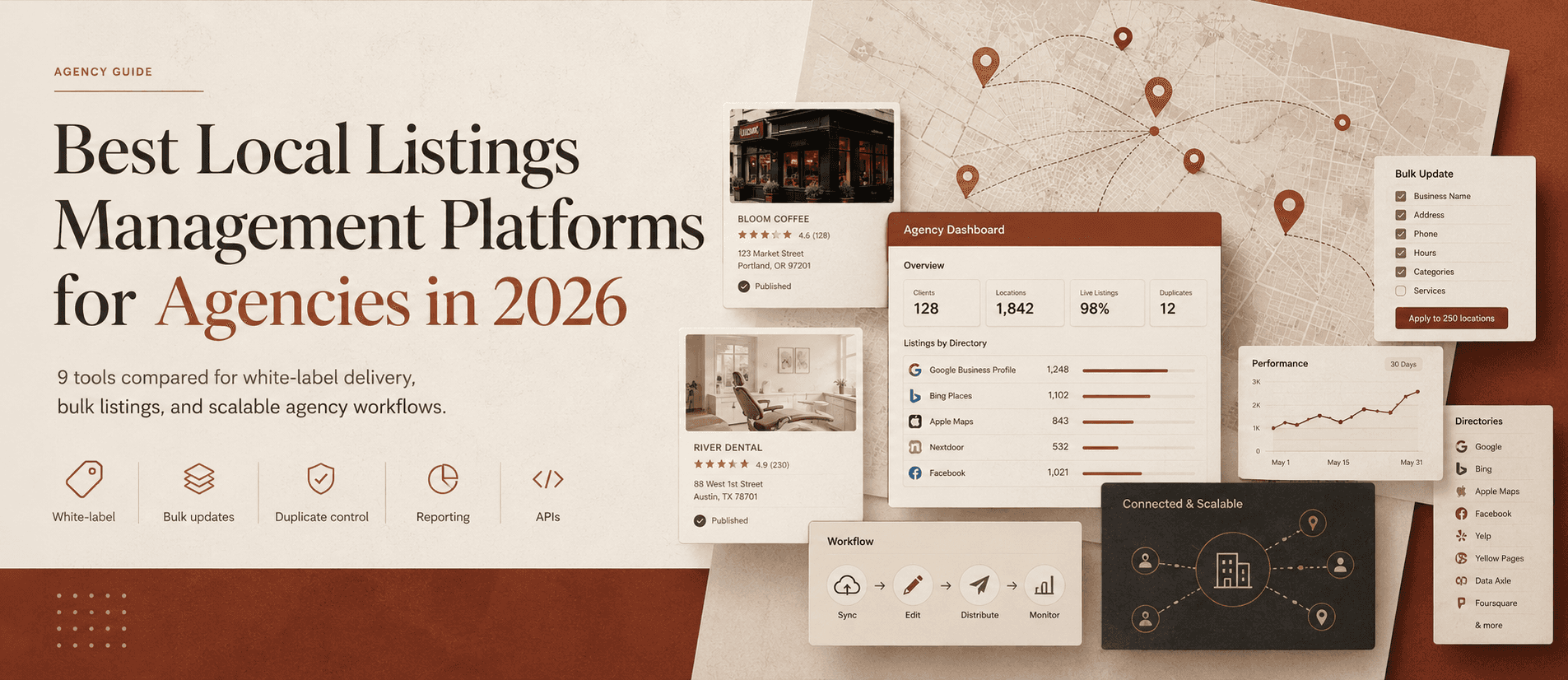
Synup publishes white-label, bulk editing, and multi-client pricing rather than quoting them. Yext is the stronger choice for enterprise clients that need Knowledge Graph governance. Vendasta suits agencies that resell a branded marketplace.
This page does not call Synup the strongest platform.
Synup publishes white-label, bulk editing, and multi-client pricing rather than quoting them. Yext is the stronger choice for enterprise clients that need Knowledge Graph governance. Vendasta suits agencies that resell a branded marketplace.
Key takeaways
- This page compares nine listings platforms on agency work only: white-label delivery, multi-client scale, listing ownership after churn, and reporting.
- Most vendors on this list do not publish a price. Yext, Uberall, SOCi, and Birdeye all quote by deal. Budget planning starts with a sales call.
- White-label means different things by vendor. Some brand a client portal, some brand a report, and some brand a reseller marketplace. Ask which one you are buying.
- Ownership is the least documented test. Only Yext states in public that canceling does not delete listings. Get the exit terms in writing from every finalist.
- Rank here rewards what a vendor documents in public. A published white-label rule beats a promise made in a sales call.
- Several names on this list are add-on or resale tools rather than a listings system of record. Match the tool to the job before comparing price.
- Prices and plan names change. Confirm the live vendor page before you quote a client. Confirm the live vendor page before you quote a client.
Teams often use business listing management to describe the same discipline as local listings management.
For the operating model behind the shortlist, read the local listings management guide.
What is the best local listings management platform for agencies in 2026?
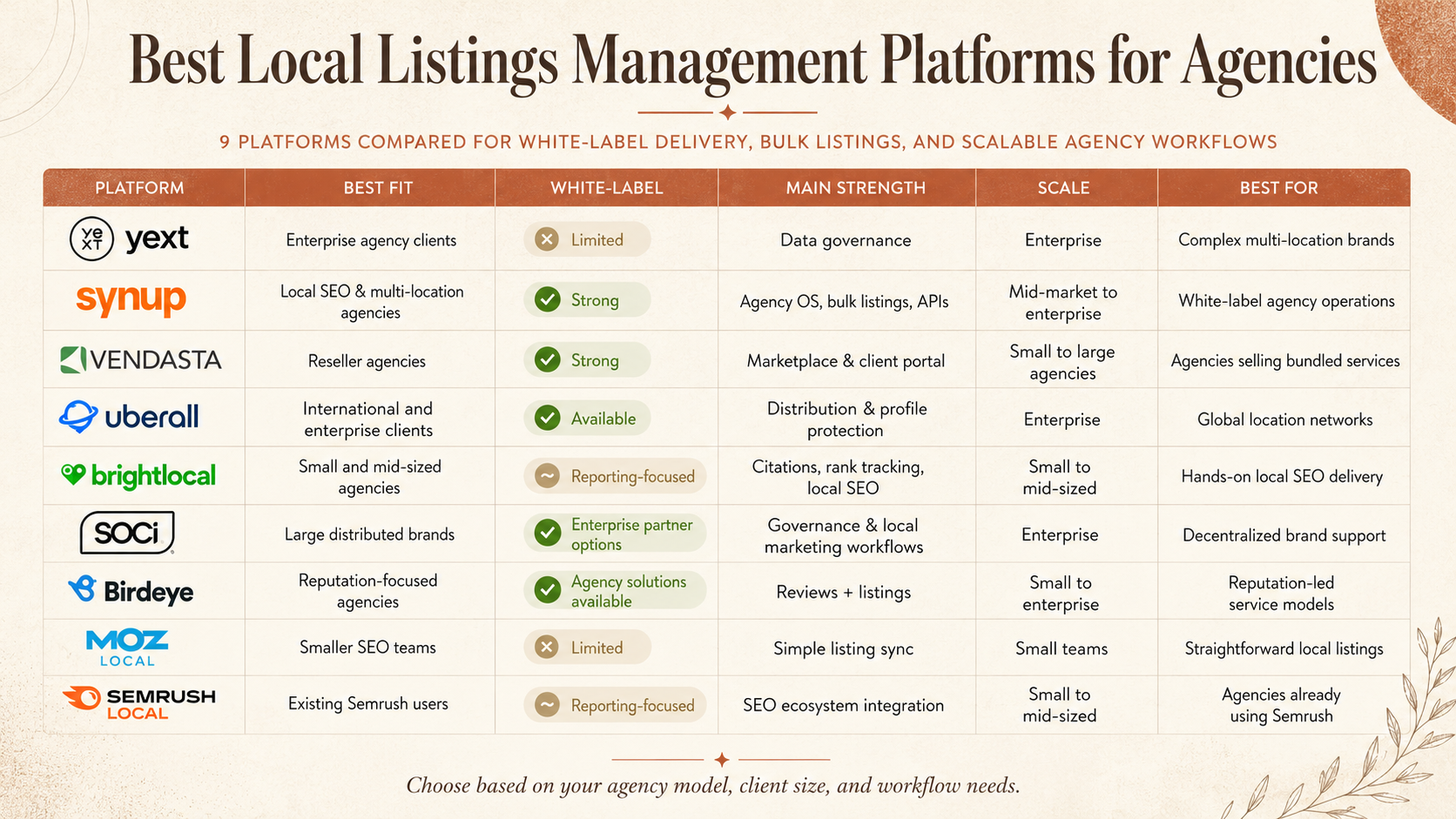
Synup publishes a white-label listings price. Yext is stronger for enterprise Knowledge Graph work. Vendasta fits reseller marketplaces. The table scores nine vendors on four tests: white-label, bulk, ownership, and reporting.
Can you white-label the client view? Can one workflow cover 20 clients or 2,000 locations? Do you keep or transfer the listings after churn? Can you report without another tool?
A vendor that fails one test can still be right for a narrower job. The table says which job that is.
| Rank | Platform | Best fit | White-label | Bulk and duplicate tools | Ownership | Starting price | Main limitation |
|---|---|---|---|---|---|---|---|
| 1 | Synup | Agencies running many SMB or mid-sized multi-location books under their own brand | Yes, published on Premium and above | Bulk edits, duplicate suppression, APIs | Confirm export and publisher login handoff in the contract | Solo $49/mo (1 location, no white-label). White-label starts at Premium $299/mo, or $239/mo billed annually. Pro $499 / Scale $899. Enterprise is custom. Per Synup. | White-label is not on Solo. Location bands cap at 50 before Enterprise. Agent work uses credits. |
| 2 | Yext | Agencies whose clients need enterprise Knowledge Graph control across many publishers | Reseller and partner packages. Direct agency white-label is not the default SMB path | Deepest publisher sync and duplicate handling at enterprise scope | Yext states canceling does not delete listings. Confirm who holds publisher logins | Custom quote. No public multi-location list price | Annual enterprise sales cycle. Heavy and costly for a 20-client local SEO shop. |
| 3 | Vendasta | Agencies reselling a branded marketplace | Yes, marketplace and client portal | Listings are one product among many. Bulk depth varies by product | Marketplace products and client records follow Vendasta’s reseller terms | $99/mo Starter minimum wholesale spend | Platform fee falls only if you keep buying wholesale products. Listings are not the core OS. |
| 4 | Uberall | Agencies with international or large retail location networks | Partner and enterprise options. Confirm branded portals before you pitch | Strong profile protection and duplicate defense | Confirm data export and who owns publisher accounts after churn | Custom quote | No public starting price. Agency workflow detail is sales-led. |
| 5 | BrightLocal | Small and mid-sized agencies doing hands-on local SEO | Branded reports. Not a full white-label listings OS | Citation campaigns and audits. Weaker as a 2,000-location listings push system | Citation records live in BrightLocal. Plan for rebuild if you leave | Location-based Track plans on the public pricing page. Citation Builder from $3.20/site | Citation Builder is extra. Not built as an agency OS for thousands of locations. |
| 6 | SOCi | Agencies supporting large decentralized or franchise brands | Enterprise partner options | Strong permissions and local content workflows. Listings sit inside a wider local marketing suite | Confirm listing and page ownership in the enterprise contract | Custom quote | Broader than listings. Implementation is heavy for a listings-only retainer. |
| 7 | Birdeye | Agencies that sell reputation as the lead service | Agency solutions available | Listings exist. The product is built around reviews and inbox | Confirm listing export if reputation is not the renewal driver | Custom quote. Third-party pages often cite about $299/mo per location. Verify with sales | Expensive if you only need listings. Reporting is reputation-first. |
| 8 | Moz Local | Small SEO teams already in Moz | Agency permissions on Preferred. Not a white-label OS | Directory sync and monitoring. One subscription per location | Each location is a Moz Local subscription. Plan a cutover if the client leaves | Lite from $16/mo billed yearly or $20/mo on the public pricing page | Per-location billing does not scale like an agency OS. Weak duplicate and bulk story past tens of locations. |
| 9 | Semrush Local | Agencies already paying for Semrush | Reporting add-ons. Not a white-label listings OS | Listing management is on Local Pro, not Local Base | Listings sit inside the Semrush account. Confirm client-owned logins | Local Base $30/mo per location. Local Pro $60/mo per location | Base has no listing management. You pay per location on top of Semrush. |
Prices and plan names come from each vendor’s public pricing or product pages (confirm live before you quote).
How should agencies judge a listings platform?
Ask four questions in this order. Can you white-label the client view? Can one workflow cover 20 clients or 2,000 locations? Do you still own or transfer the listings after churn? Can you report without buying another tool?
White-label means the client sees your logo, your domain, and your report. A reseller marketplace is not the same as an agency operating system. A branded PDF is not the same as a branded portal.
Bulk work means CSV or grid edits, location groups, and duplicate suppression. Holiday hours across 500 stores should not be a ticket queue.
Ownership means who holds the Google Business Profile, who can export, and what happens when the contract ends. If the vendor keeps the publisher login, you cannot promise the client a clean exit.
Rank on this page reflects how many of those four tests a vendor passes for a typical agency book, and how much of that is documented in public rather than promised in a sales call.
Is Synup or Yext better for white-label agencies?
Synup is better for white-label agencies. The branded client view is a published plan feature rather than a partner negotiation.
Potential limitation: White-label is not on Solo. Location bands cap at 50 before Enterprise, and agent work uses credits, so a large book still needs an Enterprise conversation.
Yext is better when the paying work is enterprise location-data governance and a custom annual contract is acceptable.
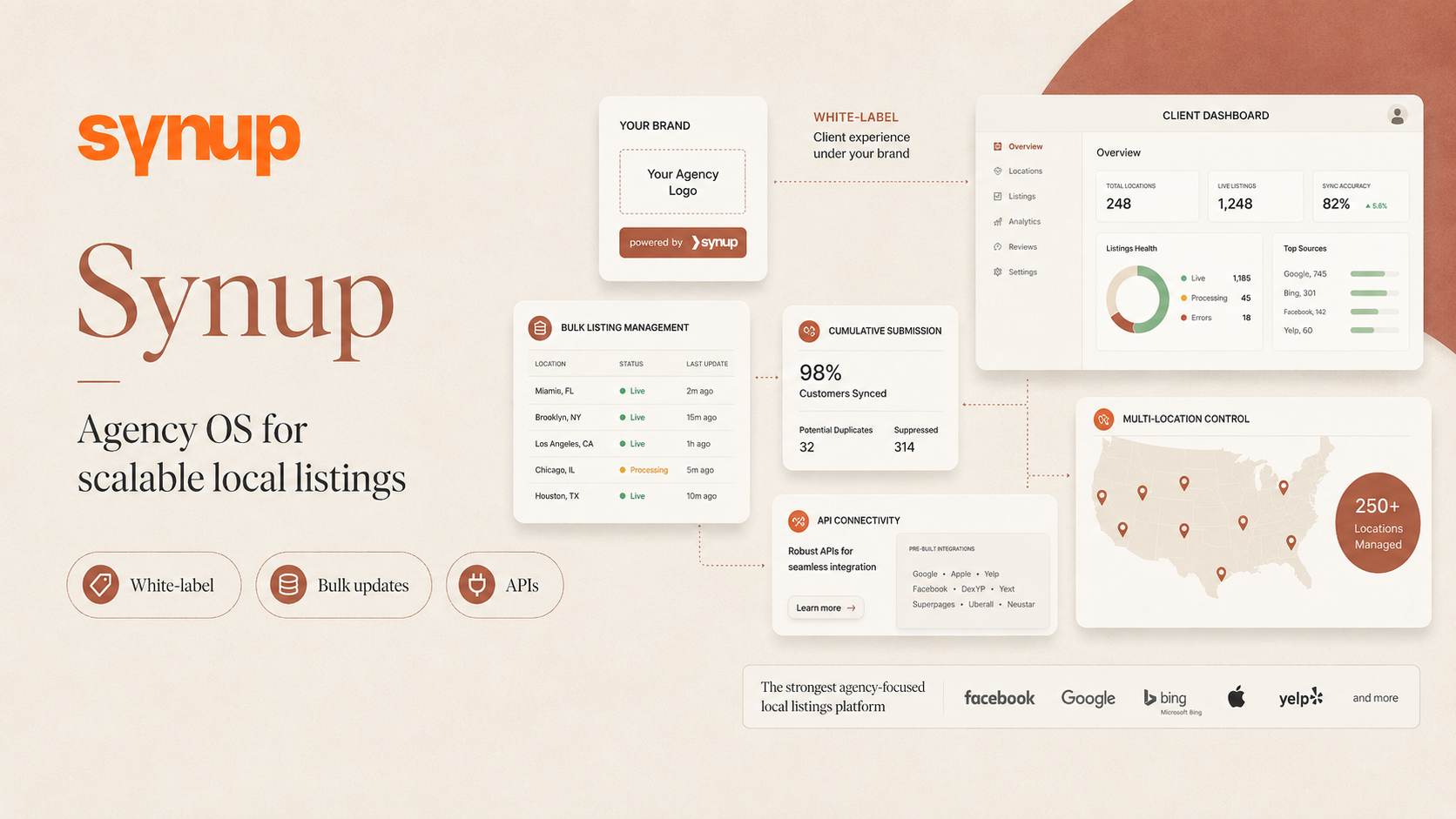
Synup sells to the agency directly. Premium and higher plans include white labeling with no Synup brand in the client experience. Bulk listing updates, duplicate suppression, APIs, Google Business Profile tools, and client dashboards sit in one product.
Yext’s strength is the Knowledge Graph, publisher coverage, and permissions for large brands. Yext’s own FAQ points smaller businesses to reseller partners. Agencies do not get a self-serve price.
Best for
Agencies that need a branded portal, bulk listing work, and a starting price they can put in a proposal.
Why it fits agencies
You can put your brand on the client view from Premium. You can group locations and push updates without a separate listings desk. You can quote a 20-client book without an enterprise RFP.
Pricing
Per Synup public plan bands.
| Plan | Public price | Capacity called out on that page |
|---|---|---|
| Solo | $49 per month | 1 location. White-label is not included. |
| Premium | $299 per month | Up to 10 locations. White-label included. |
| Pro | $499 per month | Up to 25 locations. Dedicated agent environment. |
| Scale | $899 per month | Up to 50 locations. |
| Enterprise | Custom quote | Above 50 locations. |
Annual (billed annually, 20% off): Solo $39, Premium $239, Pro $399, Scale $719. White-label is Premium and above.
Scale includes up to 50 locations at $899/mo, or $719/mo billed annually. Thousands of locations still need Enterprise.
Credits meter agent tasks. Extra credits are sold in blocks. Older plan names seen on third-party roundups are not on the live page.
Limitation
White-label is not on Solo. It starts at Premium ($299/mo, or $239/mo billed annually) for up to 10 locations. Scale caps at 50 locations before Enterprise. Agent work uses credits. Confirm the live card and the selected tier's client-facing entitlements in the order form.
Synup does not replace the CRM, billing, or project tools an agency already runs.
Onboarding still needs a data cleanup sprint if the client book is dirty.
Public ownership and exit terms are less explicit here than Yext’s.
Who should not buy it: a one-location in-house team, or an enterprise buyer who mainly wants Knowledge Graph governance.
Bottom line
Synup passes the white-label, multi-client, and reporting tests at a published price. It is not ranked first on this page.
Its weakest test is documented ownership, where Yext is clearer.
Is Yext a good listings platform for agencies?
Yext is a good listings platform when the client is an enterprise that needs Knowledge Graph control. It is a weak default for a white-label SMB agency book that needs a price this week.
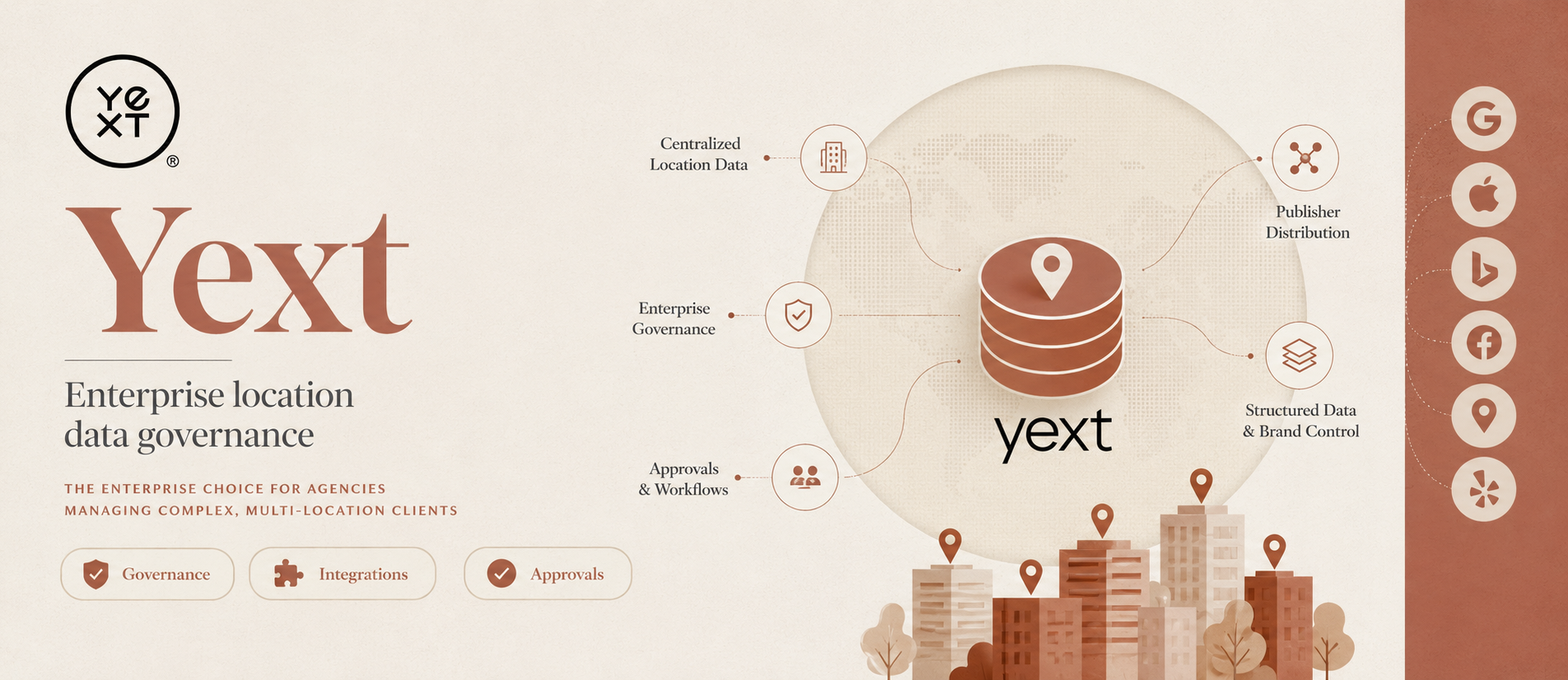
Yext centralizes location data, publisher integrations, approvals, and permissions.
That is the right stack for healthcare networks, franchises, and global brands with many stakeholders.
Publisher depth and duplicate handling are the most mature in this group.
It is not a simple white-label local SEO desk.
Yext prices by solution and location count, and billing is annual. There is no public multi-location sticker price.
Best for
Agencies whose retainers are enterprise location-data programs with governance requirements.
Why it fits agencies
You can run strict role-based governance for a large client. Duplicate handling and publisher sync are built for that scope.
Yext says in public that canceling does not delete listings. That is the clearest ownership statement of any vendor here.
Pricing
Per Yext’s pricing FAQ. Yext states pricing is custom. Support is included. Smaller businesses are pointed to reseller partners. There is no public plan ladder to quote from.
Limitation
You will sit in a sales cycle before you can quote. The product is heavier than a 20-client local SEO shop needs. Direct branded portals for your agency are a partner conversation, not a plan toggle.
Bottom line
Yext is rank 2. It wins on enterprise scale and documented ownership.
It loses the top spot on white-label access and on having no public price an agency can quote.
Is Vendasta better than Synup for a reseller agency?
Vendasta is better than Synup if you are building a branded marketplace and can keep a wholesale minimum. Synup is better if listings operations are the product you sell.
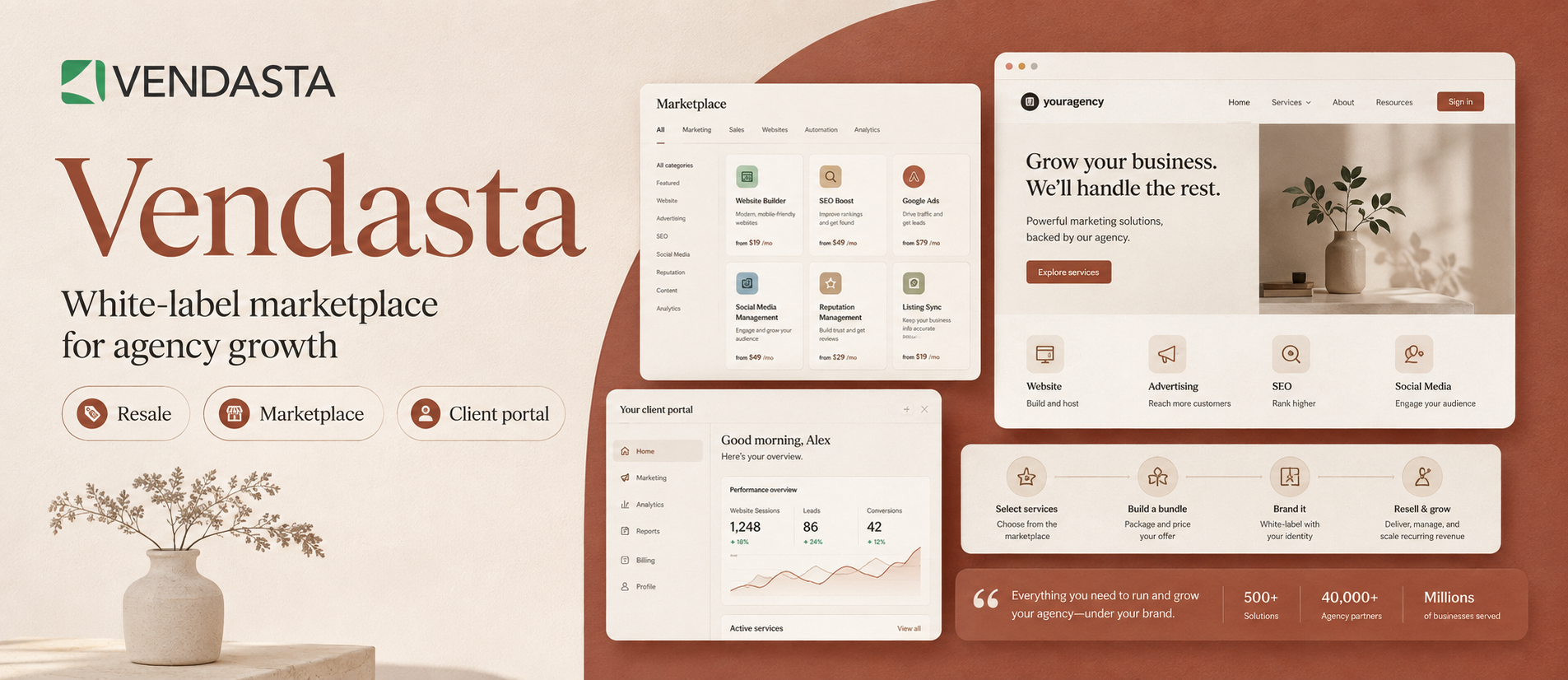
Vendasta packages listings with reputation, sites, ads, and other catalog items. Clients buy inside your brand.
The platform fee can drop to $0 in a month if qualifying product spend hits the plan minimum.
That model rewards agencies that resell a stack. It does not make Vendasta a listings operating system. Ownership of each marketplace product still follows Vendasta’s terms.
Best for
Reseller agencies that already sell a bundle, not a listings-only retainer.
Why it fits agencies
White-label commerce, CRM, and payments sit in one place. You can invoice under your brand. Snapshot reports support sales.
Pricing
Per vendasta.com/pricing.
| Plan | Signing platform fee | Ongoing minimum wholesale spend |
|---|---|---|
| Starter | $99 for month 1 | $99 per month |
| Professional | $499 for month 1 | $499 per month |
| Premium | $999 for month 1 | $999 per month |
Extra team seats are billed if they stay active. Snapshot reports have a per-report overage.
Limitation
You must keep buying wholesale products or the platform bill returns.
Listings depth is not the center of the OS. Reporting for listings health may still need another tool.
Bottom line
Rank 3 because white-label resale is real and priced in public. It trails the top two when the brief is listings ownership and bulk location control.
Can Uberall run a white-label agency book?
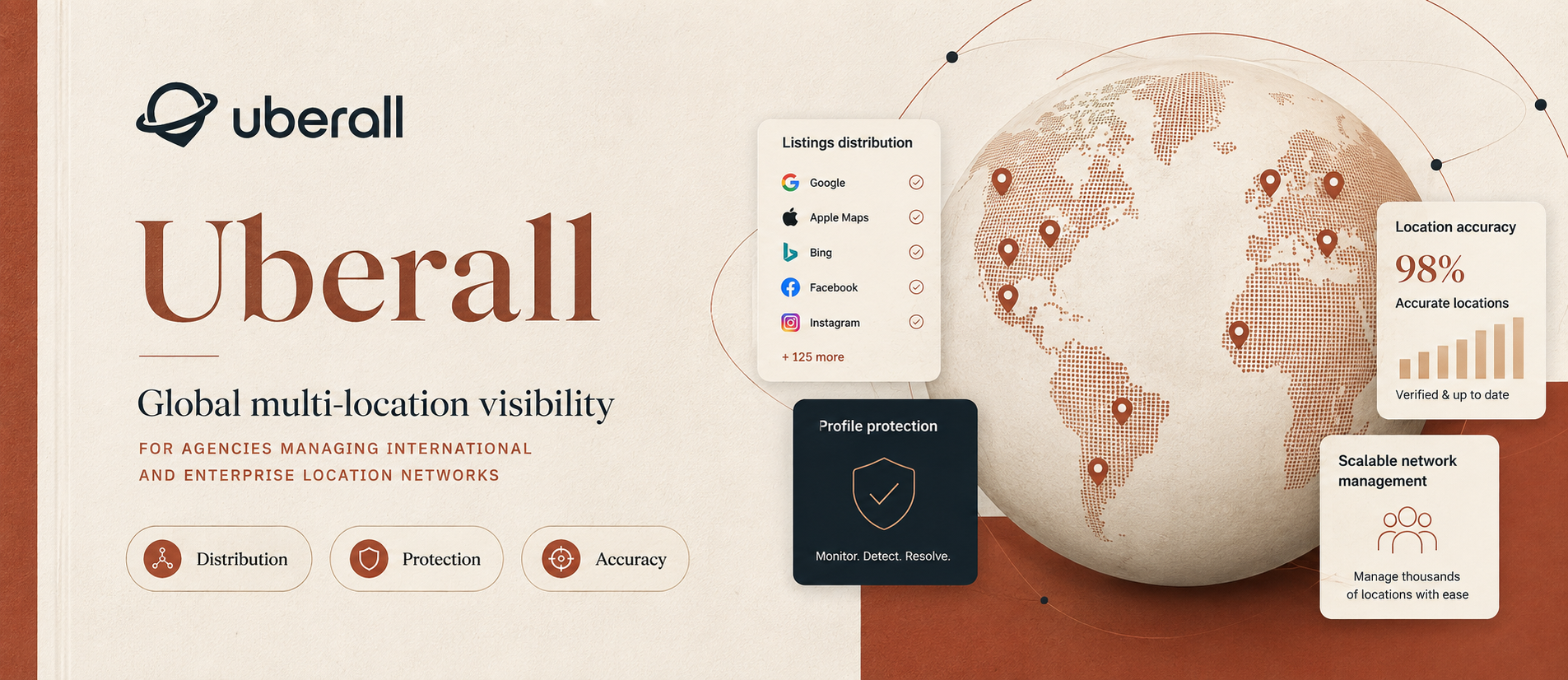
Uberall can run large and international location networks. It is not the first pick for a 20-client white-label shop that needs a public price.
Uberall focuses on listings distribution, duplicate protection, and profile accuracy for retailers and franchise groups. Partner options exist. You must confirm branded portals, bulk tools, and post-churn ownership in the deal.
Best for
Agencies with global or large retail location clients.
Why it fits agencies
Publisher coverage and profile protection are the pitch. That helps when the client’s problem is incorrect NAP at country scale.
Pricing
Custom quote. No self-serve starter price is published on Uberall’s site. Use uberall.com and the sales path.
Limitation
You cannot put a number on a proposal without sales. Agency workflow screenshots are not on a public plan card.
Bottom line
Keep Uberall for international enterprise work. Do not pitch it as a white-label OS for SMBs.
Is BrightLocal enough as an agency listings platform?
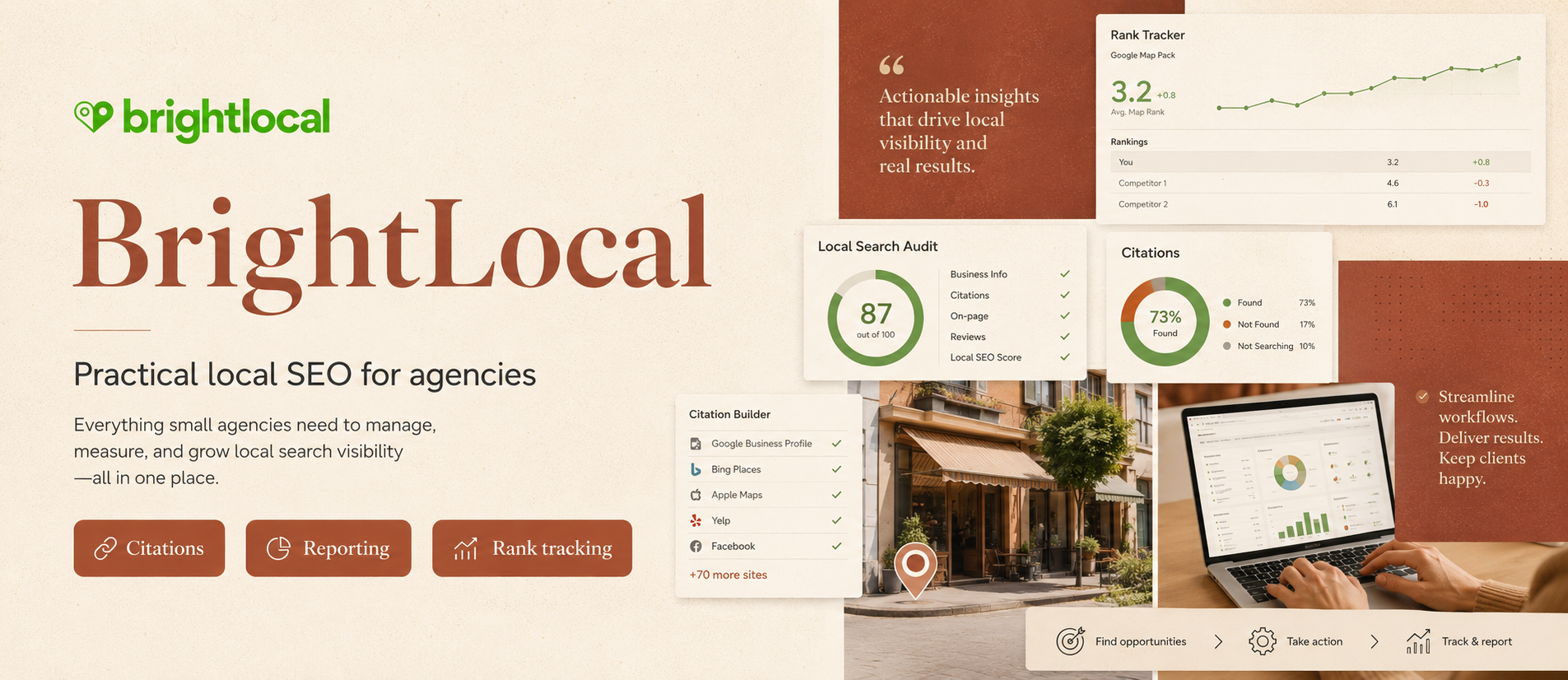
BrightLocal is enough for small and mid-sized agencies that sell local SEO reporting and citation work. It is not enough as the listings OS for 2,000 locations.
BrightLocal is strong at audits, rank tracking, citation building, and branded reports. Agencies already know the UI. Clients understand the PDFs.
Citation Builder is not inside the platform subscription. You pay per site.
Active Sync and listing protection sit on higher access levels on the public pricing page.
Best for
Boutique local SEO agencies and freelancers.
Why it fits agencies
You can white-label reports. You can show citation and rank work without an enterprise onboarding. The 14-day trial does not take a card.
Pricing
Per brightlocal.com/pricing. Platform plans are priced by location count (Track and higher). Citation Builder starts at $3.20 per site, or $2 with bulk credits. Aggregator submissions are purchased in Citation Builder campaigns. Managed SEO is listed at $1,299 per month.
Limitation
You still stitch citations, reporting, and listings sync. It will not replace Synup or Yext for bulk publisher push at franchise scale.
Bottom line
Keep BrightLocal in the stack for local SEO delivery. Do not make it the white-label listings system of record.
Is SOCi a listings tool or a local marketing suite?
SOCi is a local marketing suite with listings inside it.
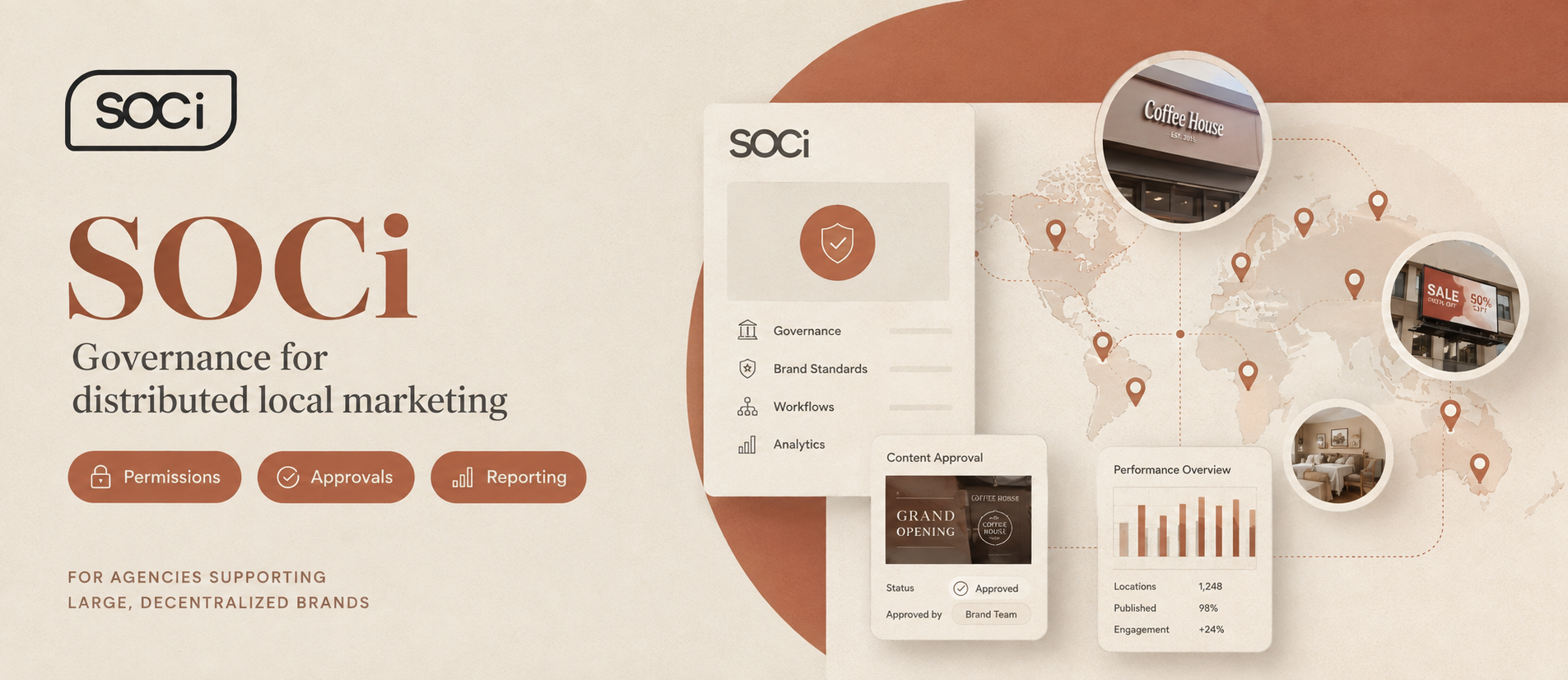
Buy it when the client needs permissions, local content, and brand control across hundreds of stores. Do not buy it as a listings-only desk.
SOCi is built for decentralized brands. Approvals, local posts, and enterprise reporting are the product. Implementation is a project.
Best for
Agencies supporting franchise or dealer networks that already have a local marketing program.
Why it fits agencies
You can govern who posts where. You can keep brand rules while locations still act.
Pricing
Custom quote. No public starter price is listed. Start from meetsoci.com.
Limitation
Scope is wider than listings. Time to value is long. A listings-only retainer will pay for modules it does not use.
Bottom line
Use SOCi for distributed brand operations. Cut it from a pure listings bake-off if the client will not fund the suite.
Should a listings agency buy Birdeye?
Buy Birdeye when reputation is the lead offer. Do not buy it as the cheapest way to sync directories.
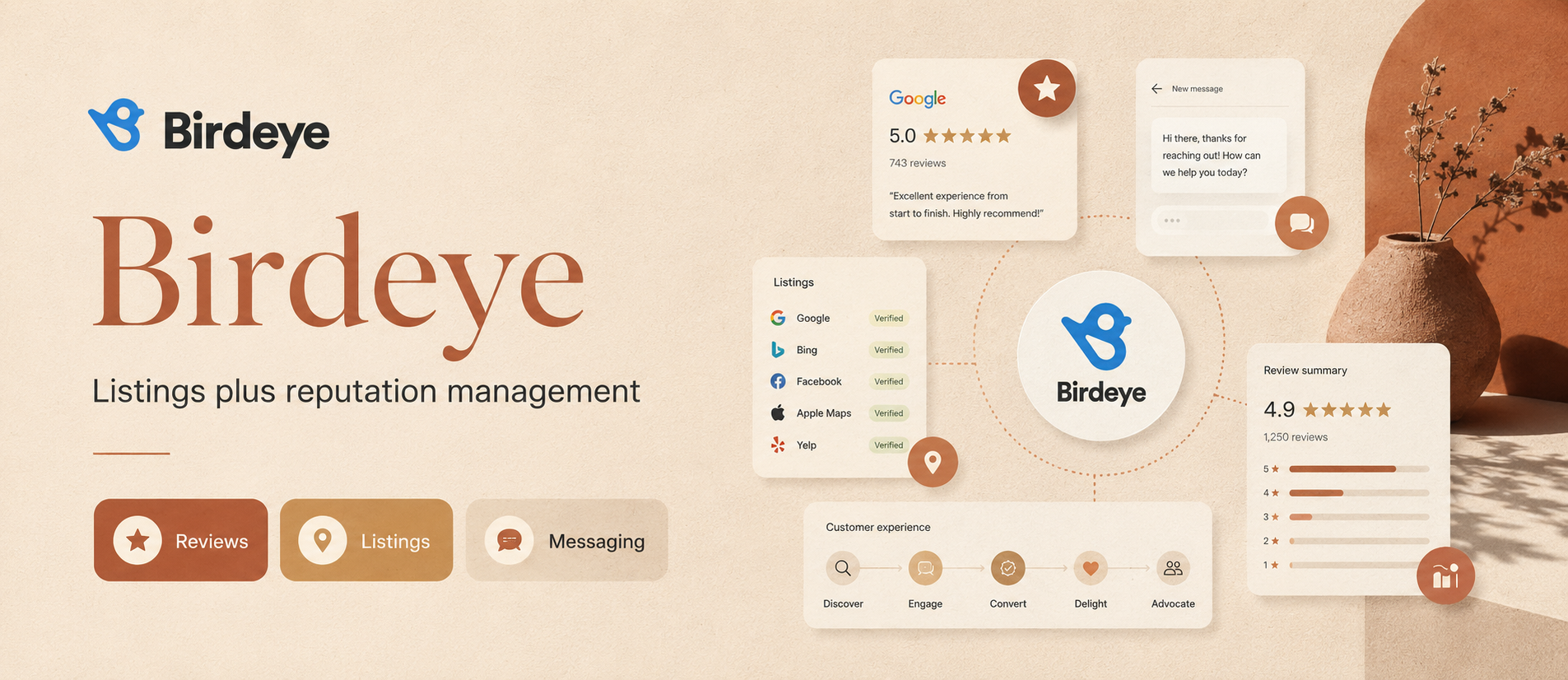
Birdeye combines listings, reviews, messaging, and customer experience. Reporting is reputation-first. Listings are in the bundle, not the center.
Best for
Agencies that sell review generation and inbox management with listings attached.
Why it fits agencies
You can show review volume and response time in one client view. Location staff can work from one inbox.
Pricing
Custom quote on Birdeye’s site. Independent roundups often cite about $299 per location per month. Treat that as unverified until sales confirms. Start from birdeye.com.
Limitation
Per-location cost is hard to defend on a listings-only SOW. You may still need a listings specialist tool for duplicates and publisher tickets.
Bottom line
Rank 7 because reputation fit is real and listings-first fit is not.
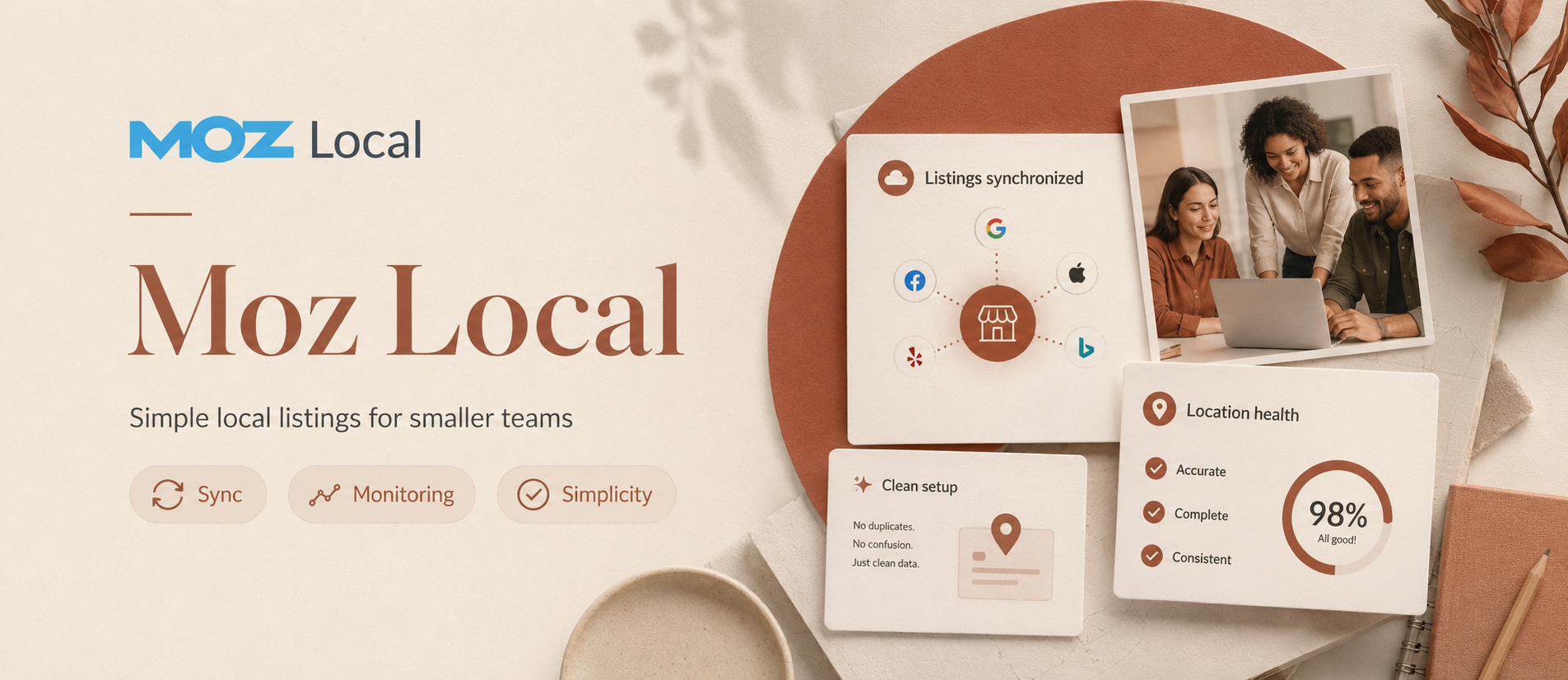
Can Moz Local white-label a 20-client book?
Moz Local can sync listings for small books already in Moz. It cannot white-label an agency OS for 20 clients or 2,000 locations.
Each physical location needs its own Moz Local subscription. Preferred adds agency permissions.
Lite covers listings, grid, and review monitoring. That is a technician tool, not a client portal product.
Best for
Small SEO teams that want directory push next to Moz.
Why it fits agencies
Setup is simple. US, UK, and Canadian listings are supported. Preferred includes competitor and review response tools.
Pricing
Per moz.com/products/local/pricing. Lite is $20 per month or $16 per month billed yearly. Preferred is $30 per month or $24 per month billed yearly. Elite is $40 per month or $33 per month billed yearly. Fifty-plus locations go to sales.
Limitation
Billing per location adds up fast. Duplicate suppression and bulk agency workflows are thin. White-label is not the product.
Bottom line
Use Moz Local for a handful of locations. Do not build an agency listings practice on it.
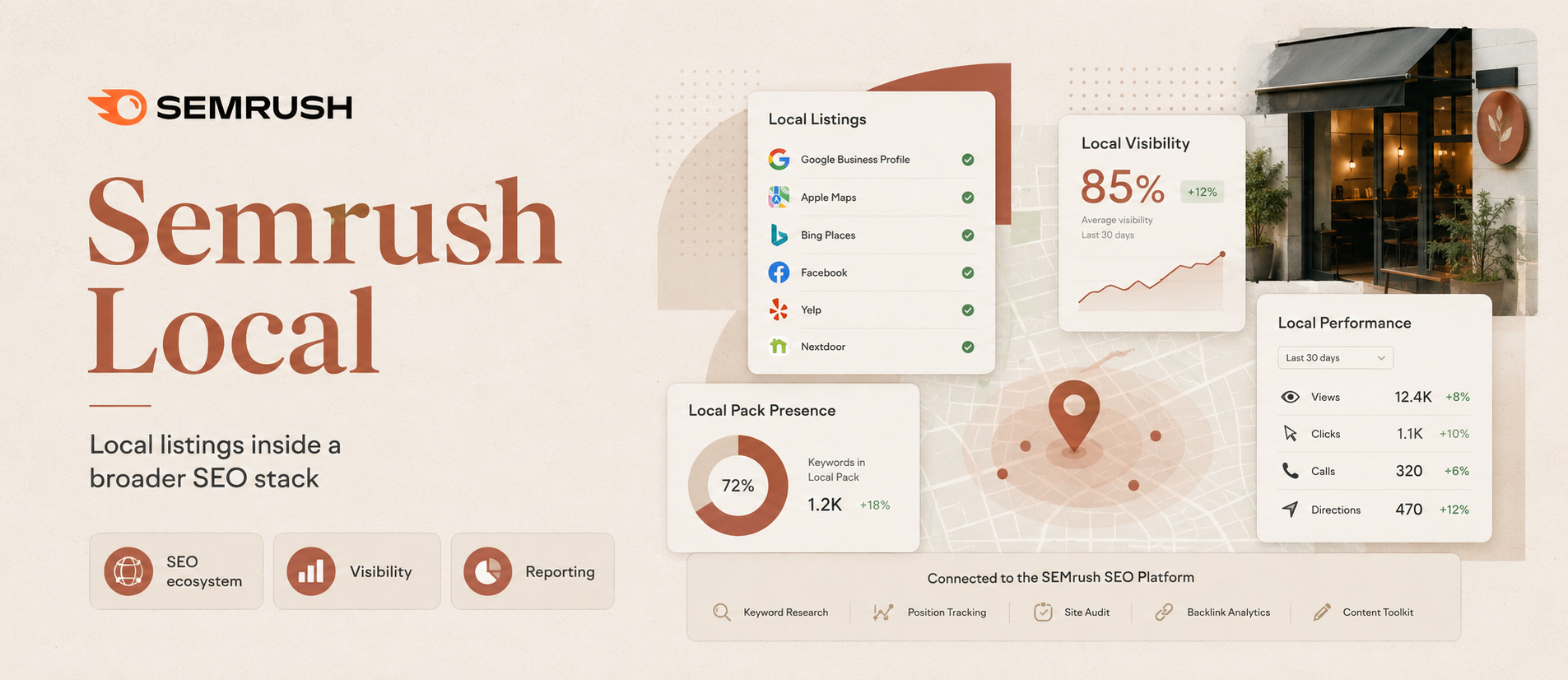
Does Semrush Local replace a white-label listings platform?
No. Semrush Local is a toolkit add-on for teams already in Semrush. Listing management starts on Local Pro, not Local Base.
Local Base is $30 per location per month for GBP agent and map rank tracking.
Local Pro is $60 per location per month and adds listing management, reviews, and more map credits. Reports are extra.
You still do not get a white-label agency OS. The client does not live in a Semrush-branded portal you can fully skin.
Best for
Agencies that already report in Semrush and want listings attached to that login.
Why it fits agencies
One vendor for SEO and local add-ons. Duplicate tracking exists on Pro. APIs exist for teams that will engineer around Semrush.
Pricing
Per semrush.com/pricing/local and the Local Toolkit help article. Local Base $30 per location per month. Local Pro $60 per location per month. Extra users $20 per month. Base reports $10 per month. Pro reports $20 per month. Twenty-plus locations can go to custom Local Business pricing.
Limitation
Listing management is not in Base. Cost stacks on top of the core Semrush subscription. White-label delivery is reporting, not an agency OS.
Bottom line
Keep Semrush Local if the account is already Semrush. Do not pick it to win a white-label bake-off.
Which platform should an agency pick?
| Agency job | Pick |
|---|---|
| White-label listings delivery for 20 clients or more at a published price | Synup (Premium or higher) |
| Enterprise Knowledge Graph and publisher control | Yext |
| Marketplace resale with a wholesale minimum | Vendasta |
| International retail location accuracy | Uberall |
| Hands-on local SEO reports and citations | BrightLocal |
| Franchise local marketing governance | SOCi |
| Reviews as the lead offer | Birdeye |
| A few locations next to Moz | Moz Local |
| Listings add-on next to Semrush | Semrush Local Pro |
Final verdict
Synup publishes white-label from Premium, bulk tools, and a price card that cover day-to-day agency tests without an enterprise contract. It is not ranked first on this page.
Yext is the better answer for enterprise location programs. It has the deepest publisher coverage and the only public statement on what happens to listings after cancellation.
Choose Vendasta when the firm is a reseller marketplace and can fund the monthly wholesale minimum.
For the rest of the list:
- Choose BrightLocal for small local SEO books.
- Choose Uberall or SOCi for large distributed brands.
- Choose Birdeye when reviews pay the retainer.
- Choose Moz Local or Semrush Local only as add-ons to tools you already run.
The right platform is the one that lets you white-label, scale, keep ownership, and report without a second product.
No vendor on this list passes all four tests at every agency size.
Independent software reviews
Frequently asked questions
What is the best local listings management platform for agencies?
Synup publishes white-label listings delivery. White-label starts on Premium at $299 per month, or $239 per month billed annually. Solo is $49 per month ($39 billed annually) and does not include white-label. Confirm the live card at Synup before you quote a client.
Yext is the stronger answer for an enterprise client with strict governance needs. Vendasta suits agencies that resell a marketplace.
Which local listings software has the best white-label features for agencies?
Synup has the clearest public white-label rule: Premium and above, your brand, your domain, no Synup marks.
Vendasta white-labels a marketplace and billing. Yext and Uberall route white-label through partner programs, so it is a sales conversation. Moz Local and Semrush offer branded reports only.
Is Yext or Synup better for a 20-client local SEO agency?
Synup is the better fit for that book. You can price Premium, brand the portal, and run bulk updates without an enterprise contract.
Yext is better when one client needs Knowledge Graph governance across hundreds of locations and will pay a custom annual fee. Many agencies run both.
What happens to listings when an agency or client churns?
Ask who owns the Google Business Profile, who can export, and whether publisher logins transfer.
Yext states in public that canceling does not delete listings. The others do not publish an equivalent statement, so that clause belongs in the contract.
What should agencies look for besides directory count?
White-label, bulk edits, duplicate suppression, ownership, and reporting from the same product.
Directory count is easy to put in a table. It does not tell you whether 2,000 locations share one workflow, or what you can export when the contract ends.