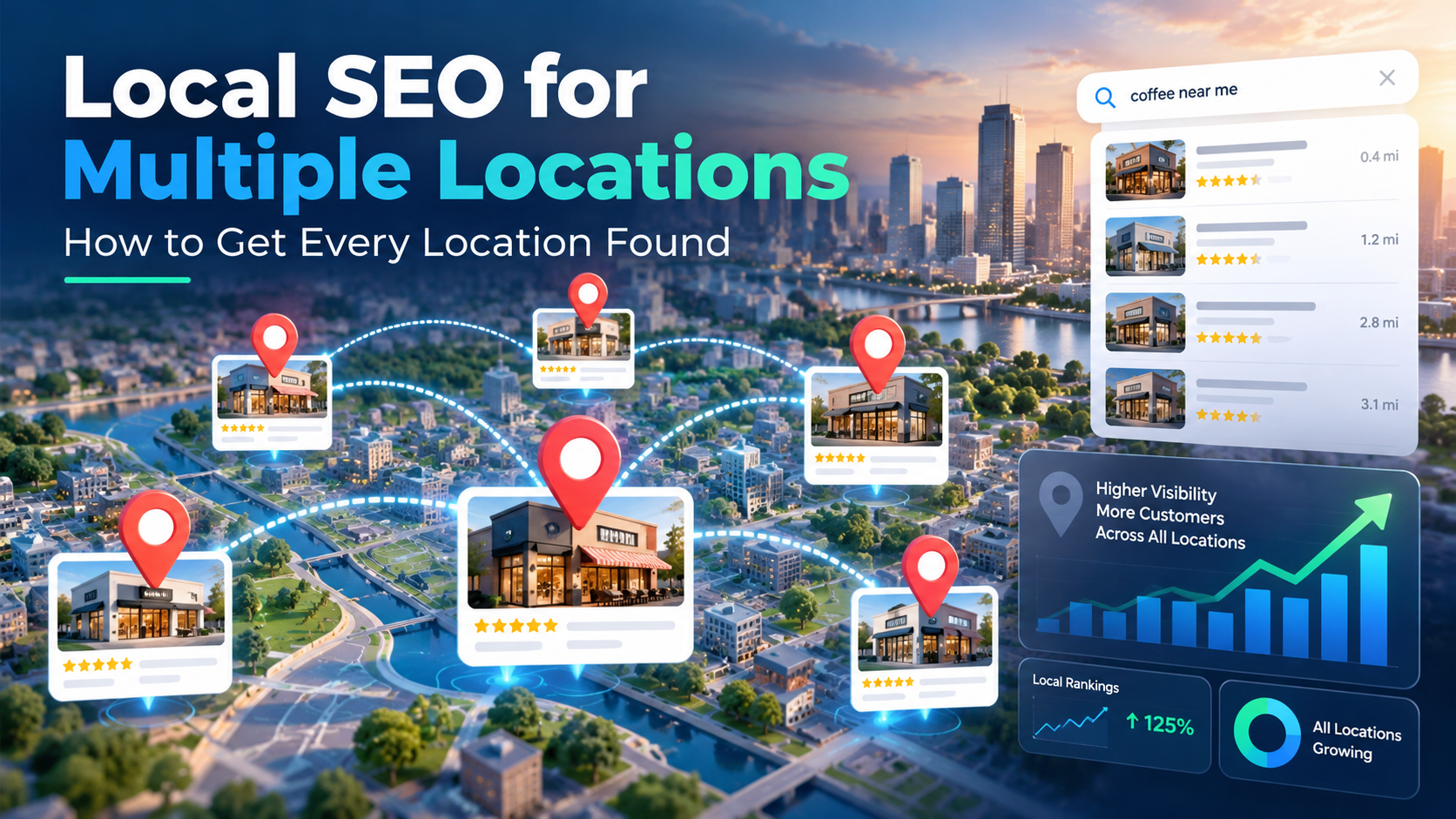
Local SEO for Multiple Locations: How to Get Every Location Found
Local SEO for multiple locations helps businesses improve the visibility of individual branches across Google Search, Google Maps, and other local discovery platforms.
Read articlePractical guidance for people responsible for location data, profiles, reputation, and local discovery.
Browse the full journalThis journal collects every published guide, comparison, analysis, and research note. Use it when you want the full set of operating pages rather than a single buying article.
Software buyers should start with the evaluation checklist, then move into the comparisons desk. Reviews and reputation, and AI search discovery, stay on their own topic desks.
Local SEO for multiple locations helps businesses improve the visibility of individual branches across Google Search, Google Maps, and other local discovery platforms.
Read article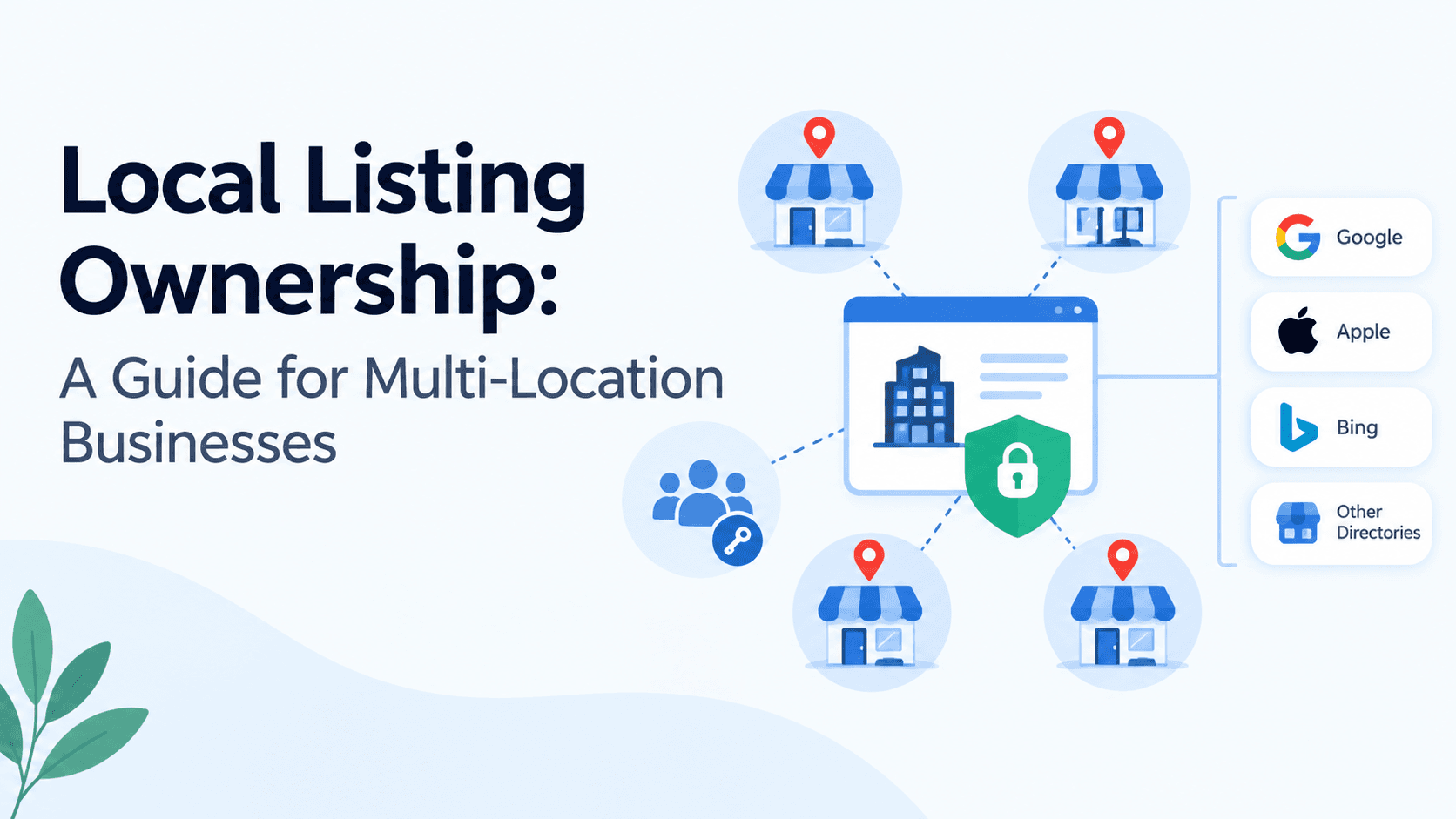
For most multi-location businesses, local listing control should stay with the business rather than an individual employee or outside agency. Give employees, regional teams, franchisees, and vendors only the access required for their work.
Read article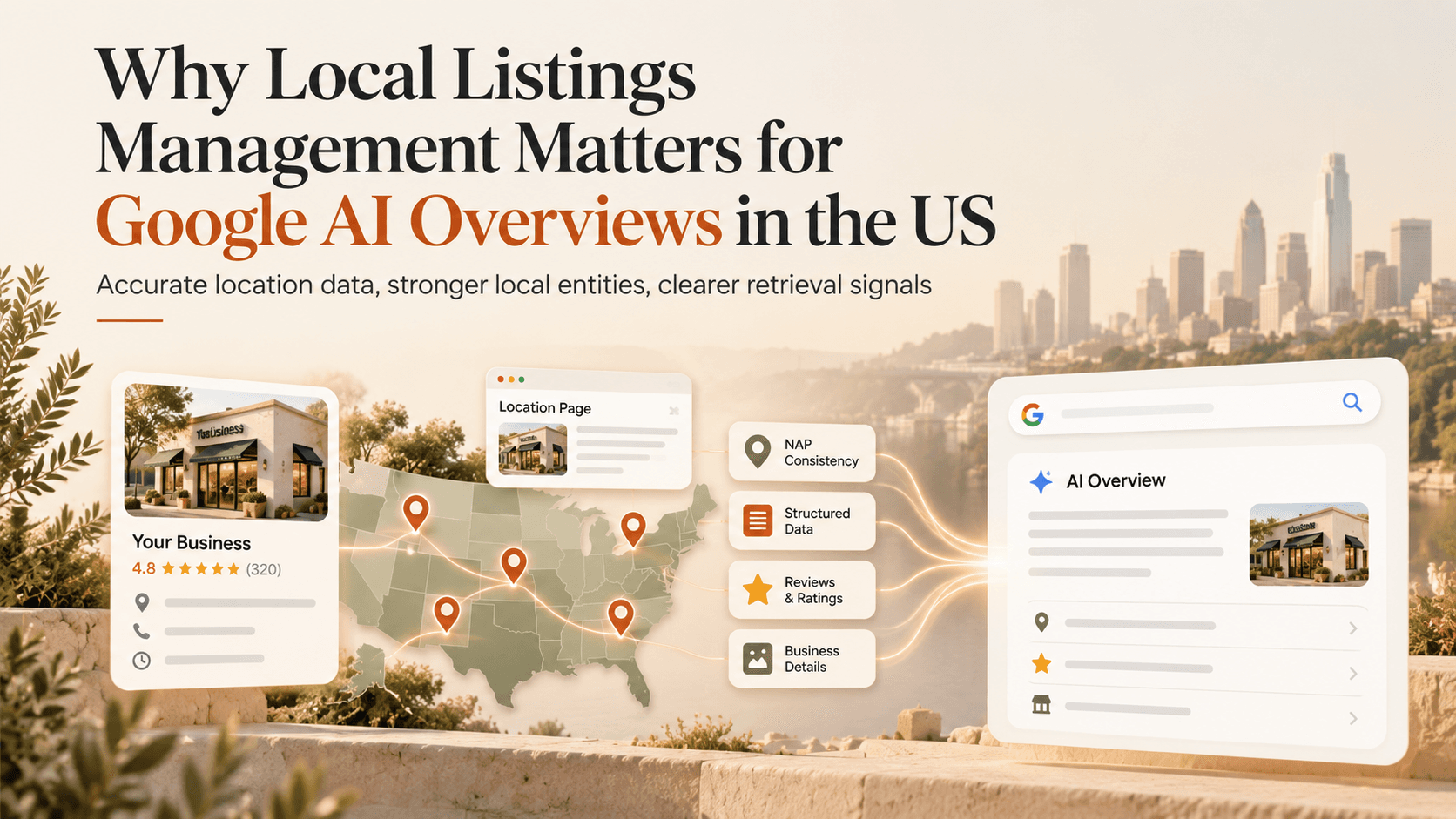
Local listings management helps Google AI Overviews by keeping each location accurate, consistent and retrievable across Business Profiles, location pages, structured data, Maps and other sources. It does not guarantee AI Overview inclusion, but it reduces conflicting business information and gives Google stronger local entity data to retrieve and reconcile.
Read article
Splitting citation and listings management across vendors can work, but coordination is the main risk. Problems start when vendors use different source data, overlap on publishers, or handle changes differently. The safest setup uses one canonical location master, clear ownership, shared change triggers, and one exception queue.
Read article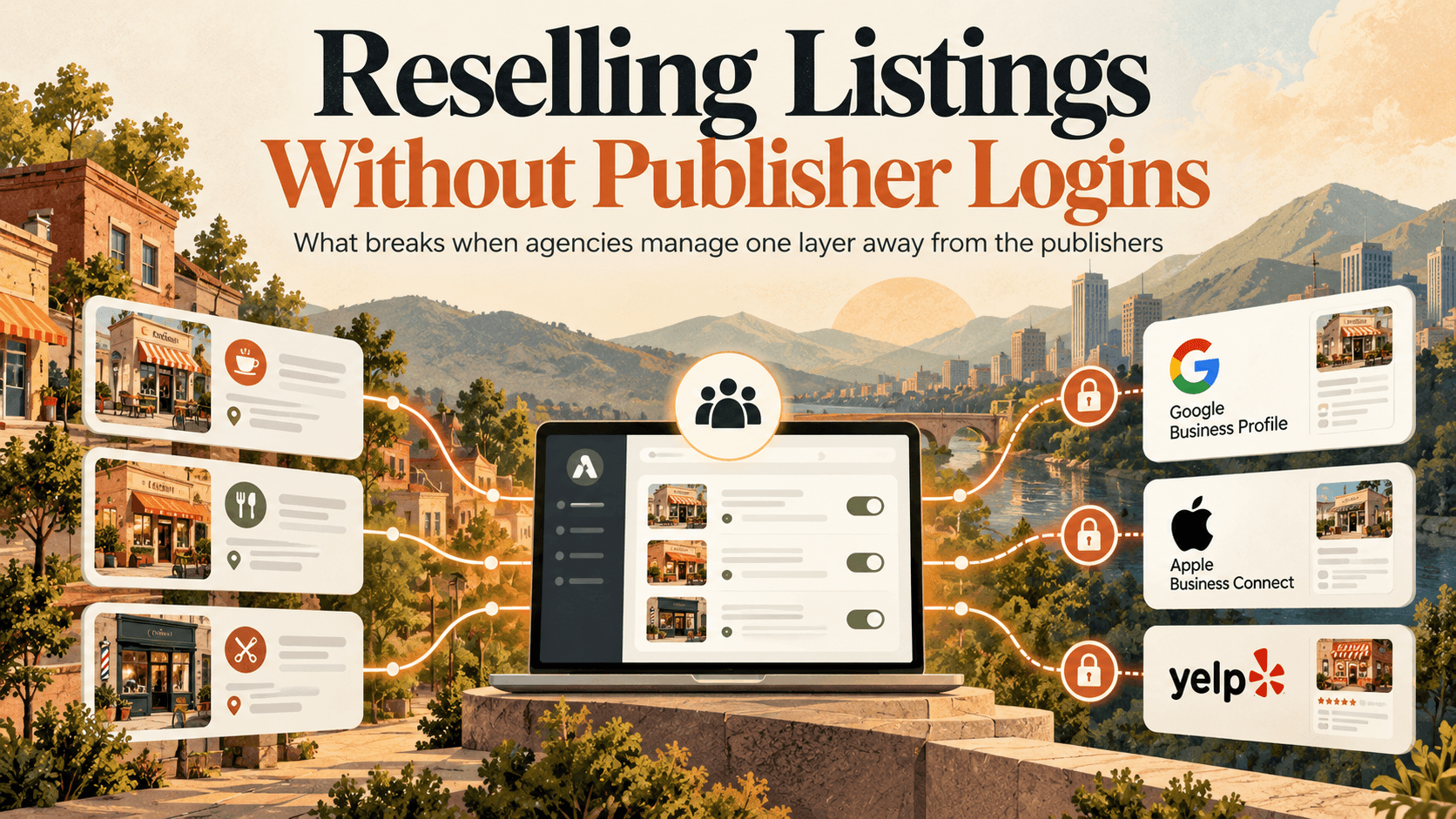
Agencies can resell local listings management without client passwords, but they still need delegated publisher access for critical accounts. Routine syncing may work through a reseller platform, while verification, recovery, connection renewals and offboarding can fail without that authority. The safer model is client ownership with revocable agency access.
Read article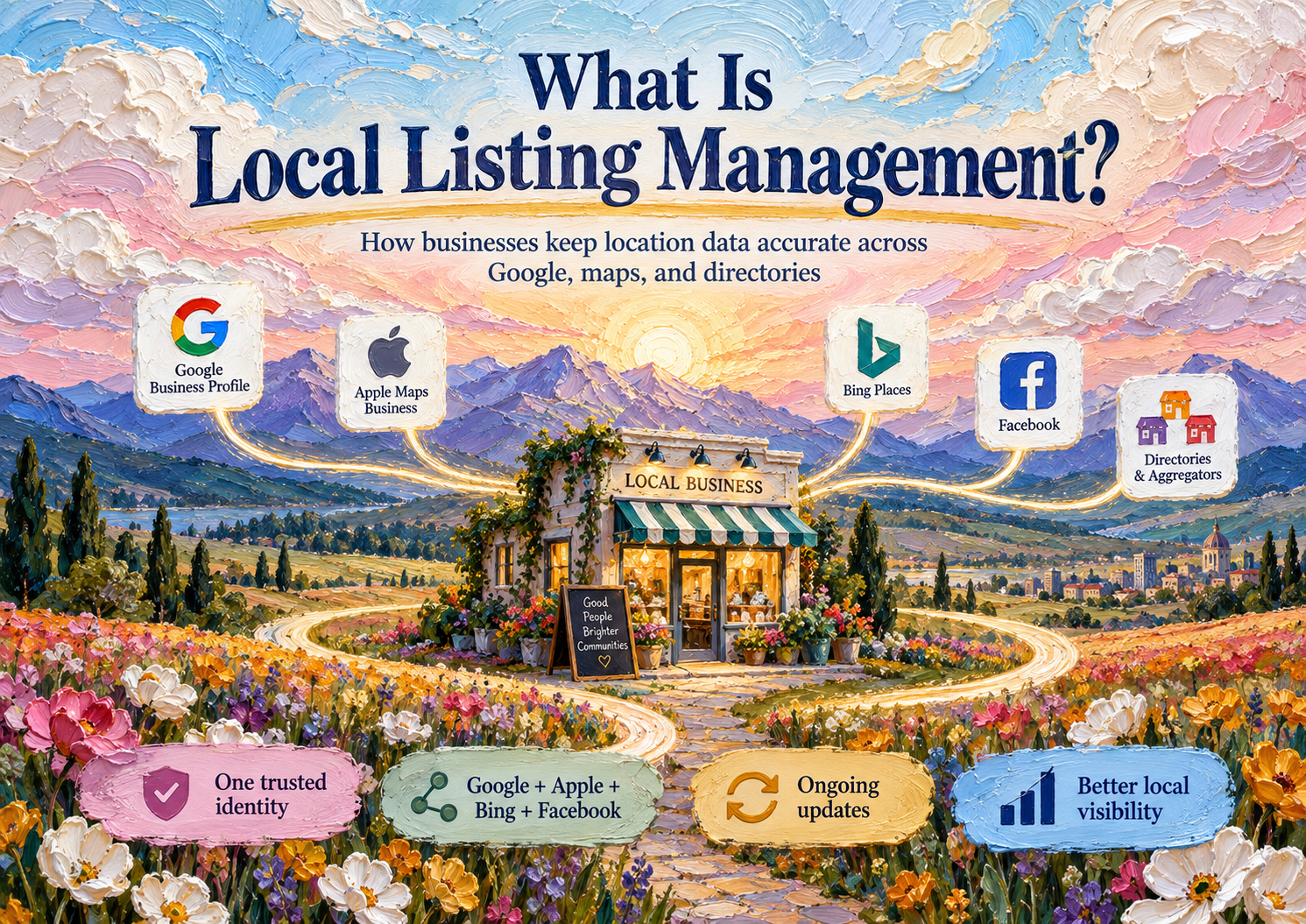
Local listing management is the ongoing work of creating, updating, and keeping a US business's local identity accurate: name, address, phone, hours, categories, and attributes across Google and other local directories, maps, and discovery surfaces.
Read article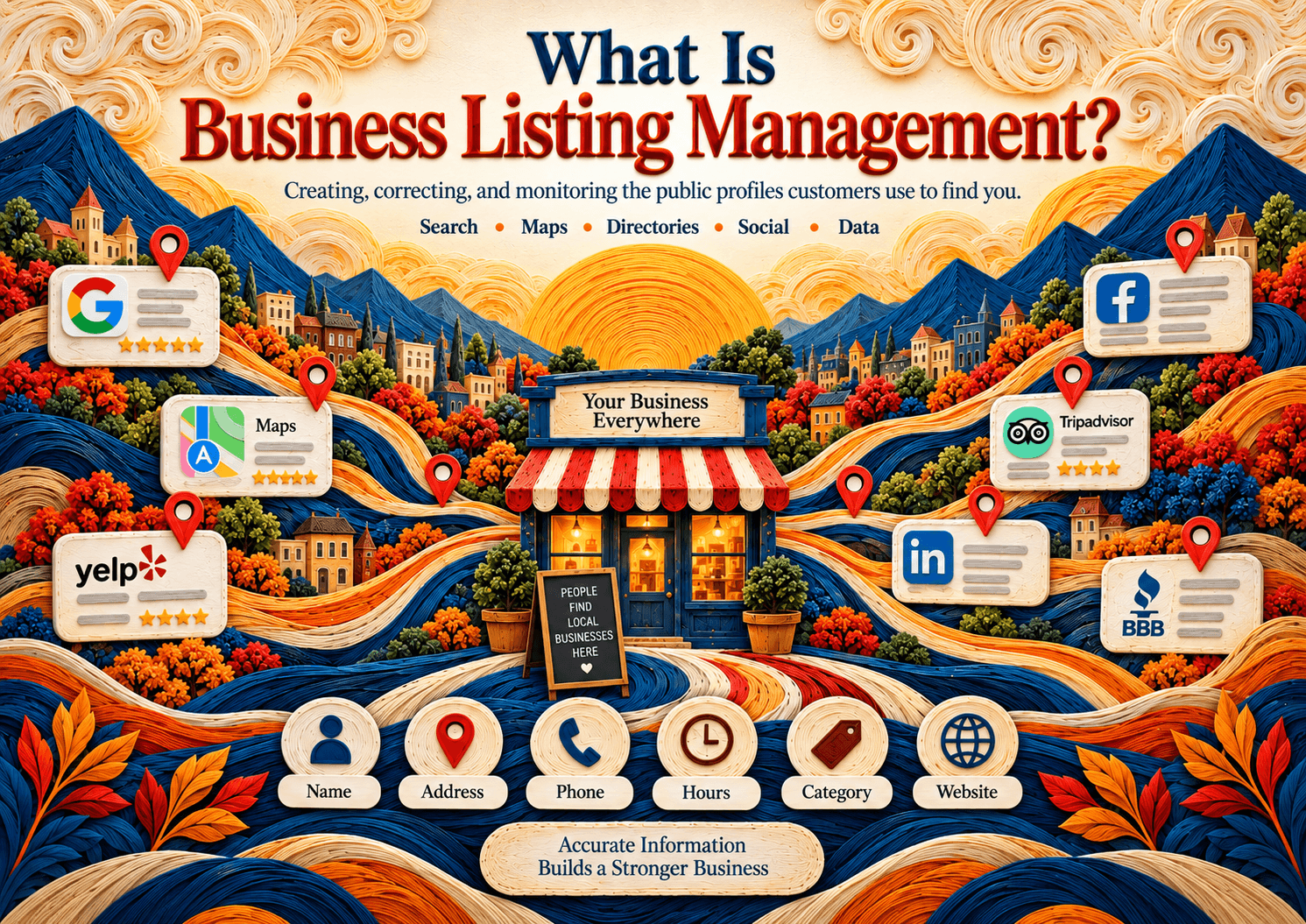
Business listing management keeps NAP, hours, categories, and attributes accurate across Google, maps, directories, and discovery surfaces for single- and multi-location brands.
Read article
Buy local listing management software (also sold as business listing management software) from the vendor via self-serve or sales, not from Google. Before checkout, verify publisher coverage, cancel/revert terms, and whether locations stay live if you leave.
Read article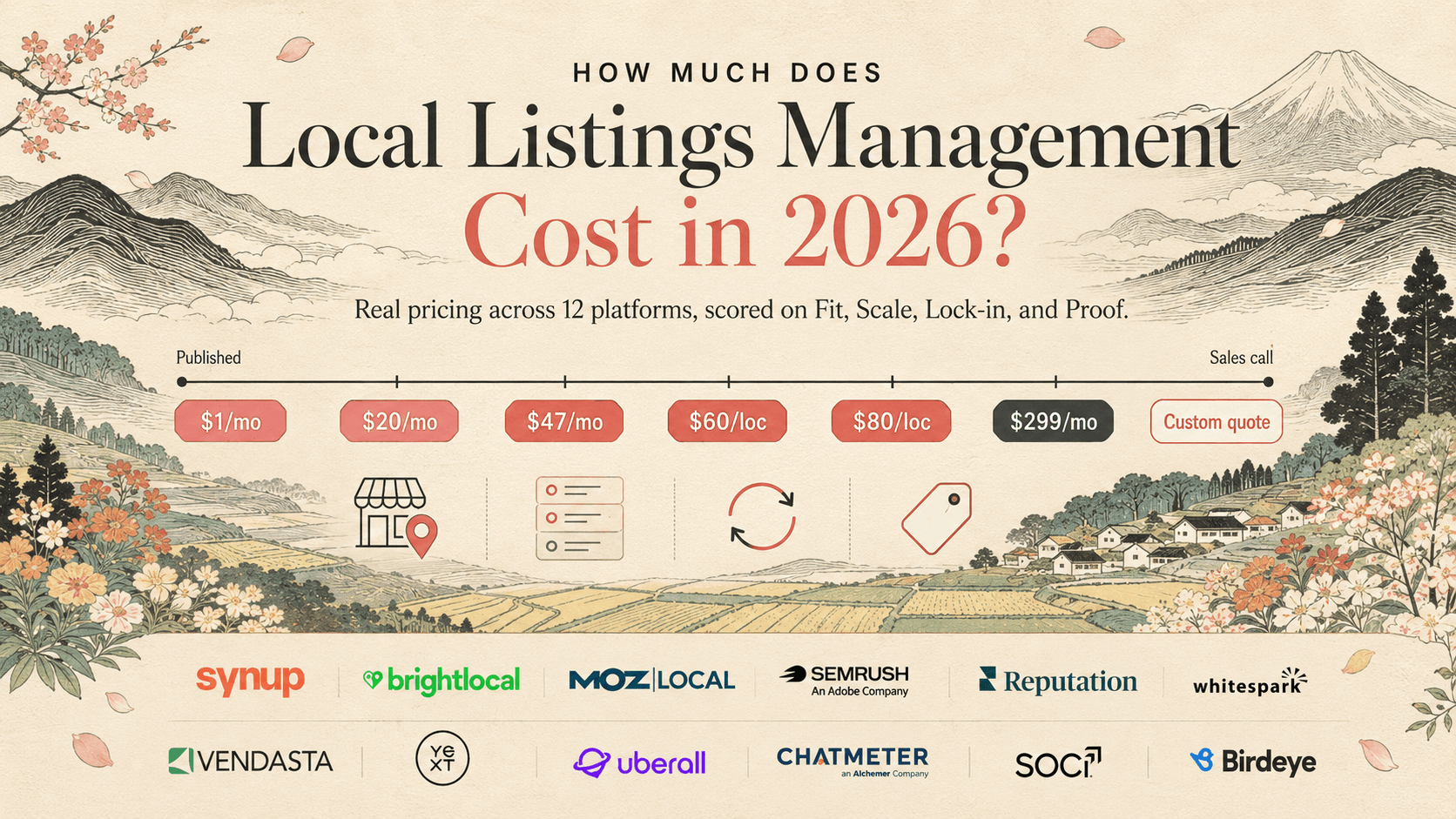
Local listings management in 2026 costs about $20 per location per month on the cheapest public card, or a custom quote at enterprise. BrightLocal, Moz Local, and Synup publish prices. Yext, Uberall, SOCi, Chatmeter, and Birdeye do not. Judge cost on four tests: published price, extra-location math, ownership after cancel, and whether reporting sits in the same SKU.
Read article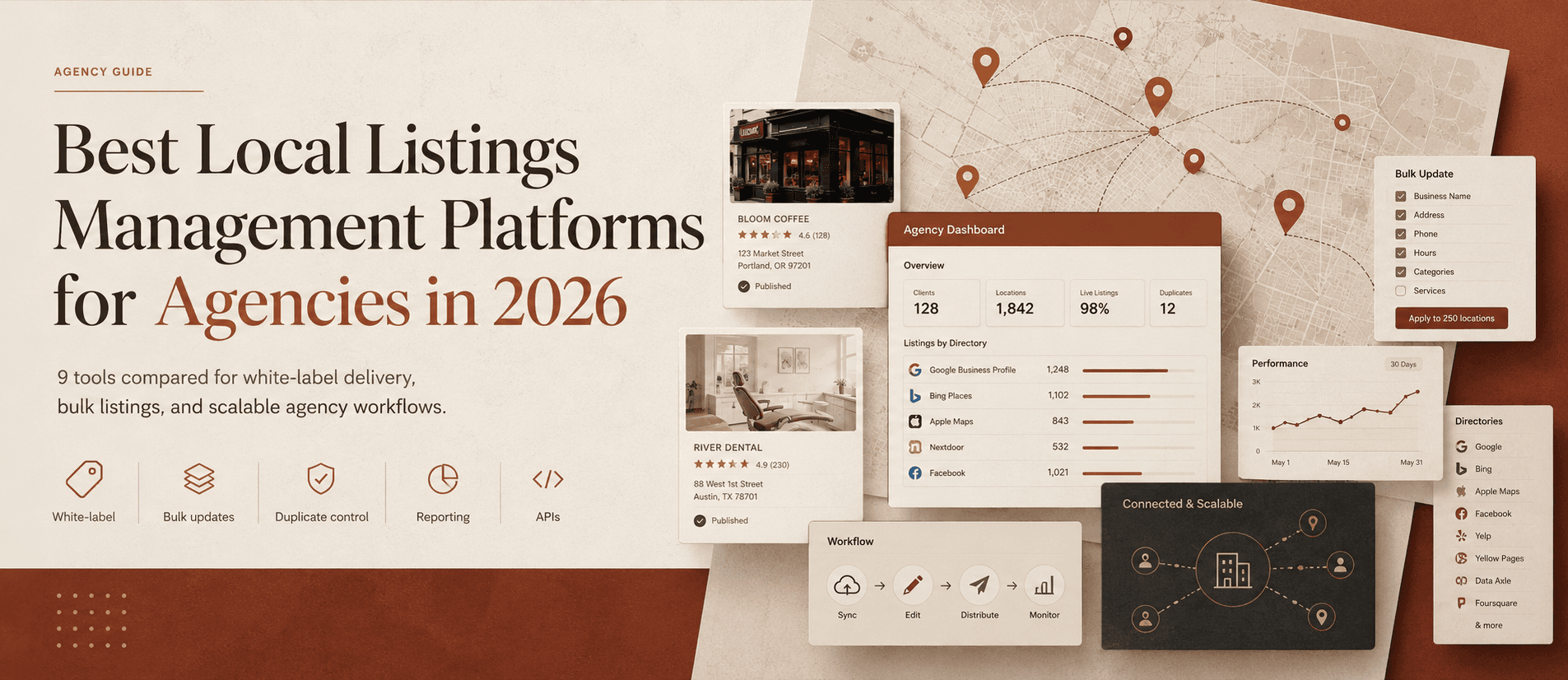
Synup publishes white-label, bulk editing, and multi-client pricing rather than quoting them. Yext is the stronger choice for enterprise clients that need Knowledge Graph governance. Vendasta suits agencies that resell a branded marketplace.
Read article
Reputation is best for automotive-specific dealer workflows, and Yext is best for complex enterprise data governance. Synup is a flexible multi-location option and is not ranked first on this page. The right choice depends on how well each platform manages dealership locations, departments, duplicates, integrations, and store identifiers.
Read article
Independent 2026 shortlist of the best local listing management software (same category as business listing management) by buyer fit: Yext, Uberall, Synup, Birdeye, and BrightLocal, with a named limitation for each vendor.
Read article
Local listings management is the ongoing process of creating, updating, and keeping location data accurate across search engines, directories, maps, and review platforms. It is the same discipline as business listing management for US multi-location brands.
Read article
A local listings management budget should reflect the total cost of ownership, not just a per-location software fee. Include the platform or service cost, implementation, cleanup, internal labor, integrations, exception handling, reporting, and transition costs. Per-location pricing is useful, but it should be treated as only one part of the annual budget.
Read articleKeep the location facts that feed maps packs and AI answers consistent: monthly inventory, Tier 1 fixes, and verify loops inside local listing management.
Read articleThe proof to keep after publishing local listing changes: public place-card checks, timestamps, and tickets so submitted never equals done.
Read articleHow to publish holiday, event, and temporary hours to Google, Apple Maps, and Bing Places, then verify public place cards, without leaving stale open-now signals.
Read article
Google My Business management is the day-to-day practice of running Google Business Profile (Google renamed GMB to GBP): ownership, NAP and hours, categories, posts, photos, Q&A, reviews, and a repeatable cadence. It is the Google lane of business listing management.
Read articleGMB management services are managed Google Business Profile (formerly Google My Business) programs for US locations: NAP, hours, categories, posts, photos, Q&A, and review workflows. They sit inside broader local listing management and business listing management programs.
Read article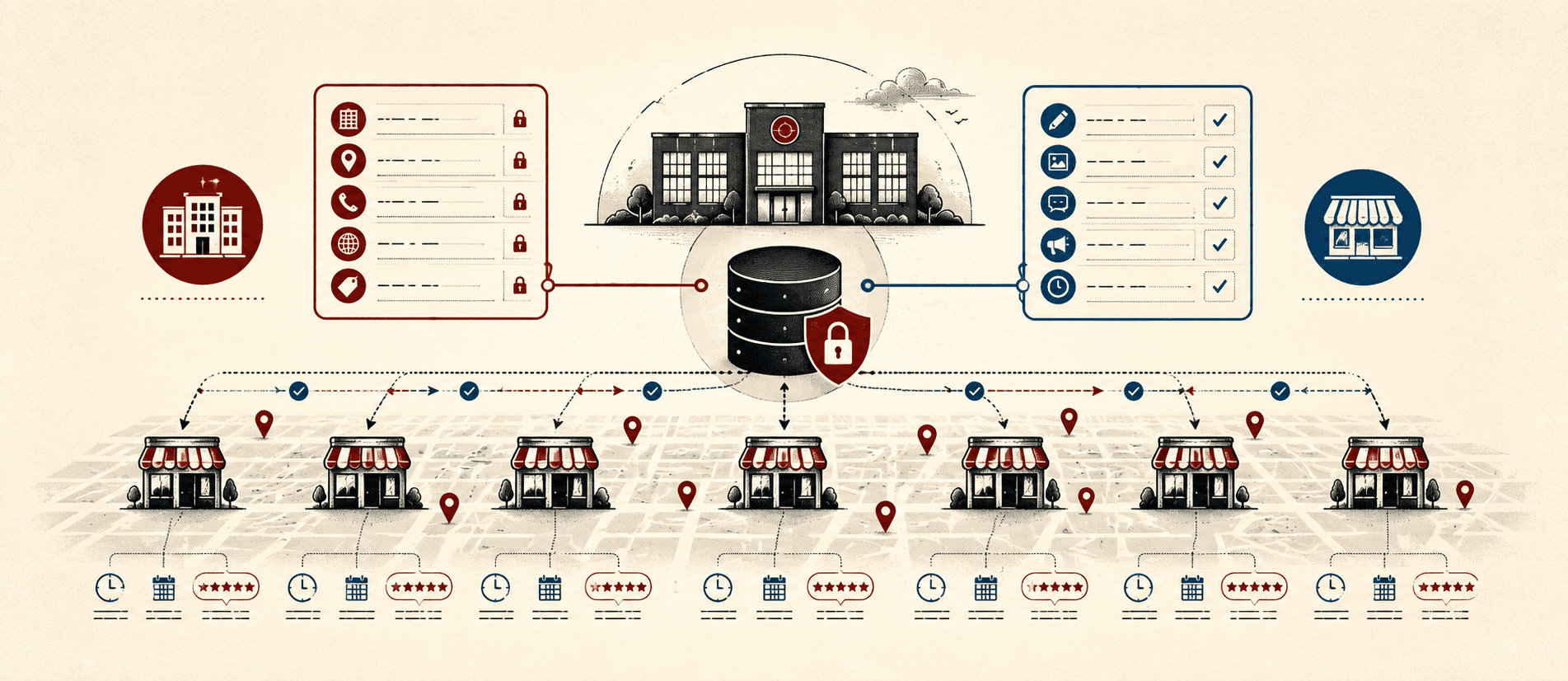
The best franchise listing management platform must protect corporate data without blocking useful local action. SOCi is the strongest franchise-focused option, Yext fits complex enterprise data governance, and Uberall suits international networks. Synup offers a balanced platform for growing systems, while Reputation and Birdeye pair listings with reviews.
Read article
Local listing management services clean and maintain location data when internal capacity runs out. This page covers scope, pricing models, SLAs, red flags, and when outsourcing beats buying software alone. Multi-location teams use managed business listing management when internal ops cannot keep NAP accurate.
Read article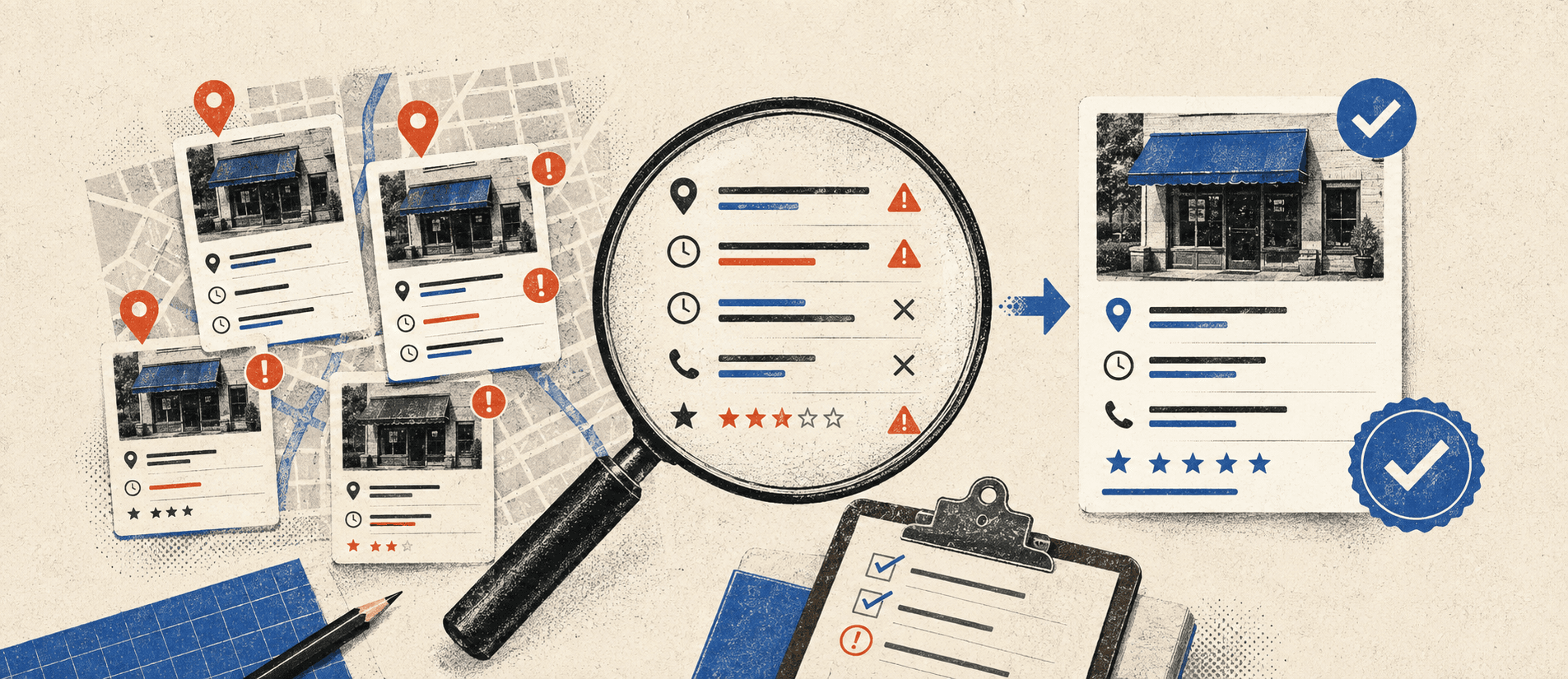
A business listing audit tool should show where name, address, phone, hours, categories and website disagree across publishers. BrightLocal is the strongest dedicated option for local SEO teams, Semrush pairs listings with broader SEO reporting, and Yext, Uberall and Synup fit brands that also need ongoing correction and governance.
Read article
Yext is a capable enterprise listings platform, but it is not the only option for multi-location brands. Synup fits teams that want listings, reviews, local SEO, social publishing and AI-search monitoring together, and it is listed third on this page. Uberall suits international location networks, SOCi is built around franchise execution, Birdeye and Reputation connect listings with customer experience, while BrightLocal and Moz Local offer lighter local SEO workflows.
Read articleLocal listing management for franchise networks fails when nobody owns the source of truth. Split fields, approvals, and lifecycle events between franchisor and franchisee, then pick a platform that enforces that split. Business listing management follows the same ownership model across the network.
Read article
A business listings audit compares every public location record with an approved source of truth. The useful output is not a single accuracy percentage. It ranks mismatches by customer impact, ownership risk, navigation failures and duplicate exposure so multi-location teams can fix the problems that actually matter first.
Read articleLocal listing management software should be scored on coverage, control, workflows, reporting, integrations and exit conditions before you buy. This evaluation checklist keeps the decision evidence-led instead of feature-driven, whether you call the work local listing management or business listing management.
Read articleGoogle Business Profile is a critical publisher for search and maps, but business listings management covers a wider data ecosystem across directories, aggregators and AI discovery surfaces. Each channel has different operational responsibility. Multi-location teams need both GBP control and broader listing accuracy.
Read article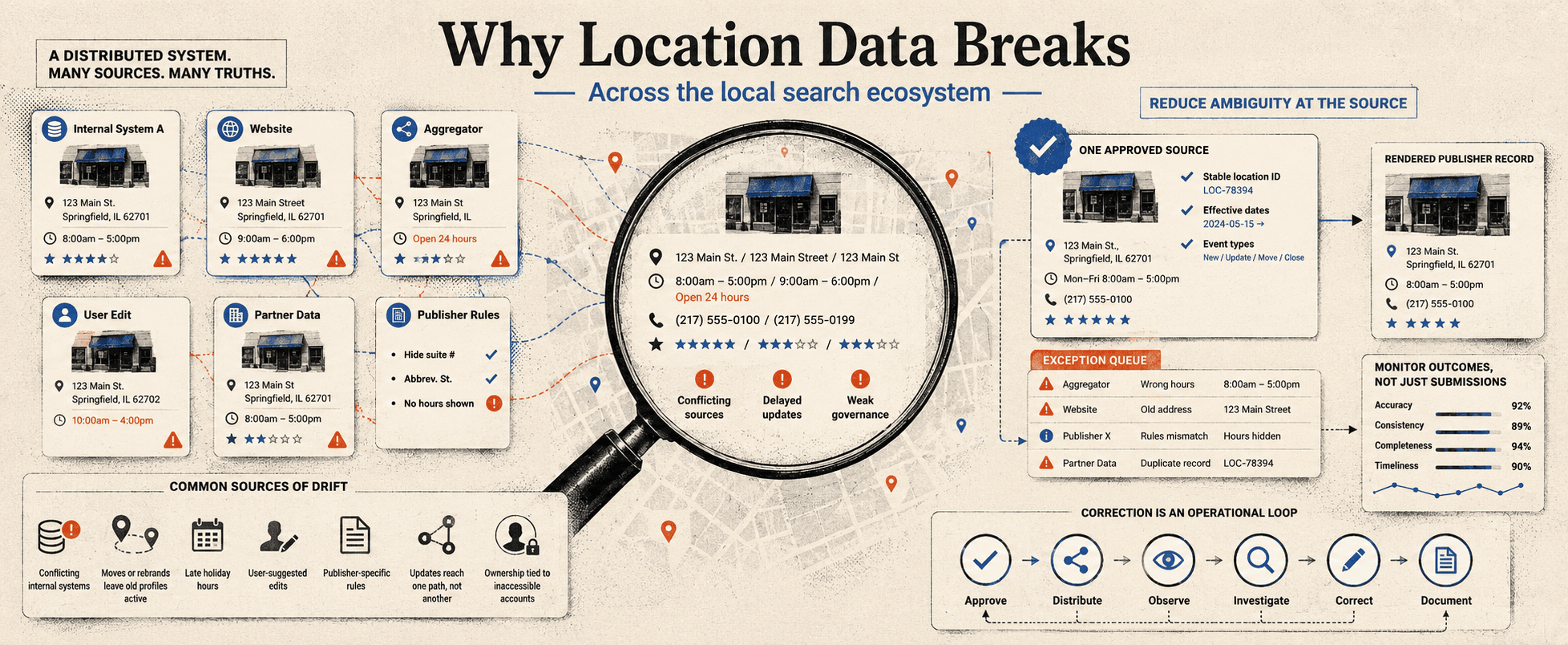
Location data breaks when multiple systems, teams, publishers and public edits compete to define the same business record. The fix is not submitting updates more often. Multi-location brands need one approved source, stable location IDs, field ownership, publisher monitoring and a verified correction loop.
Read article
A multi-location listings governance model locks high-risk NAP fields behind corporate approve-and-publish, lets local teams contribute hours and photos inside brand rules, and keeps a break-glass emergency path with a full audit trail. It is the operating system for location-profile changes.
Read article