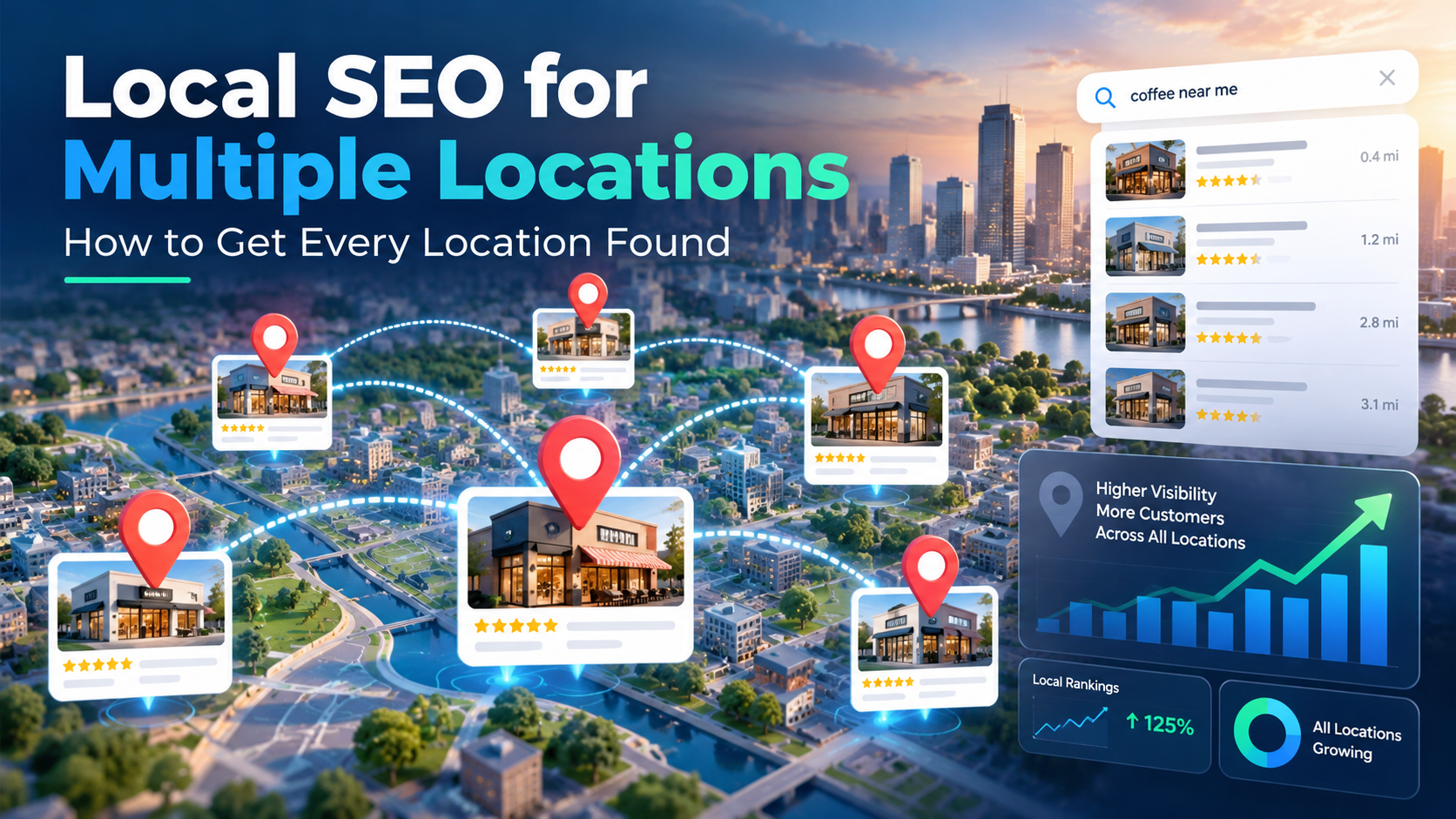
Local SEO for Multiple Locations: How to Get Every Location Found
Local SEO for multiple locations helps businesses improve the visibility of individual branches across Google Search, Google Maps, and other local discovery platforms.
Read articleStep-by-step operating guidance designed to remain useful after the browser tab is closed.
Browse the full journalLocal SEO for multiple locations helps businesses improve the visibility of individual branches across Google Search, Google Maps, and other local discovery platforms.
Read article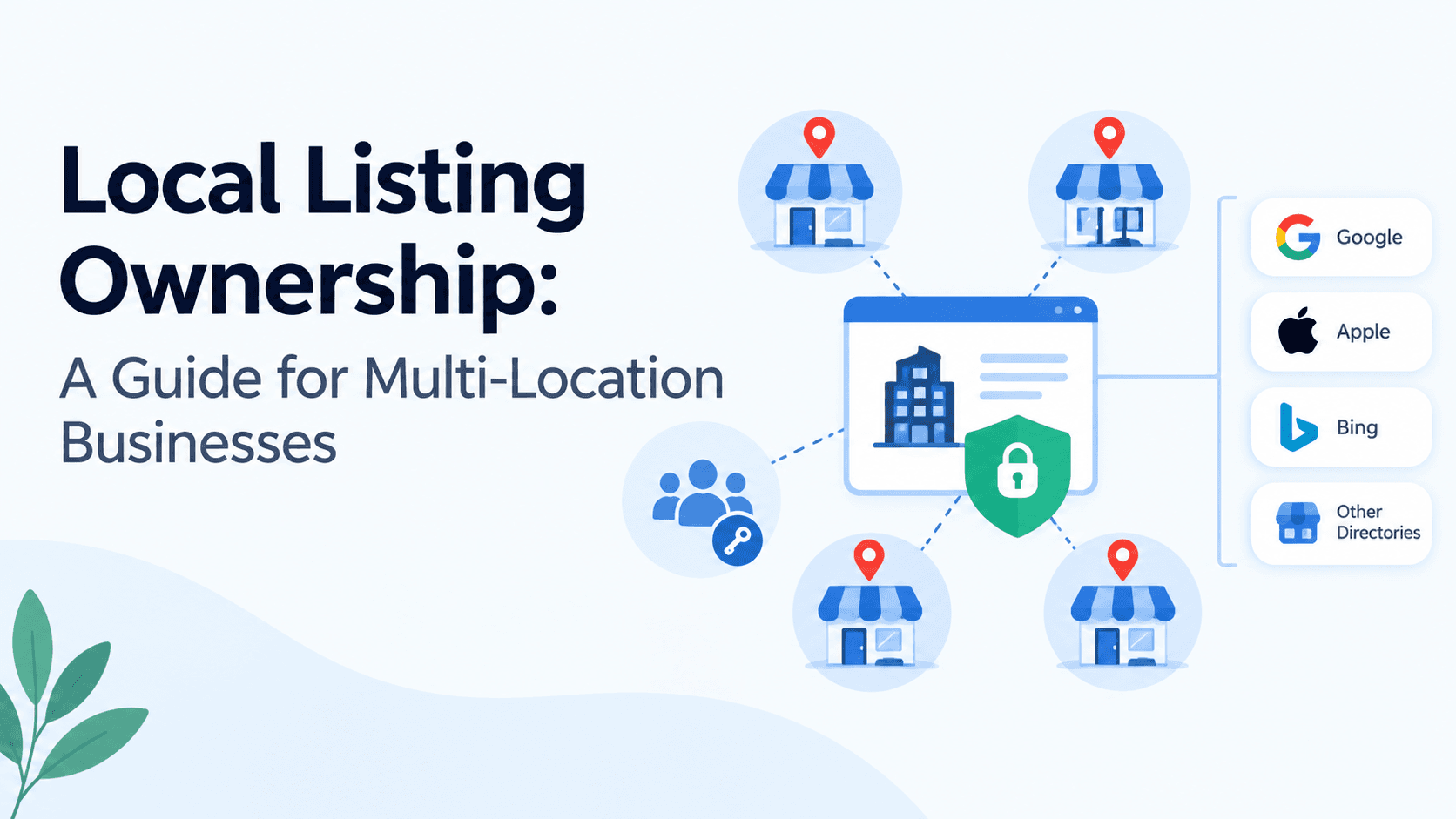
For most multi-location businesses, local listing control should stay with the business rather than an individual employee or outside agency. Give employees, regional teams, franchisees, and vendors only the access required for their work.
Read article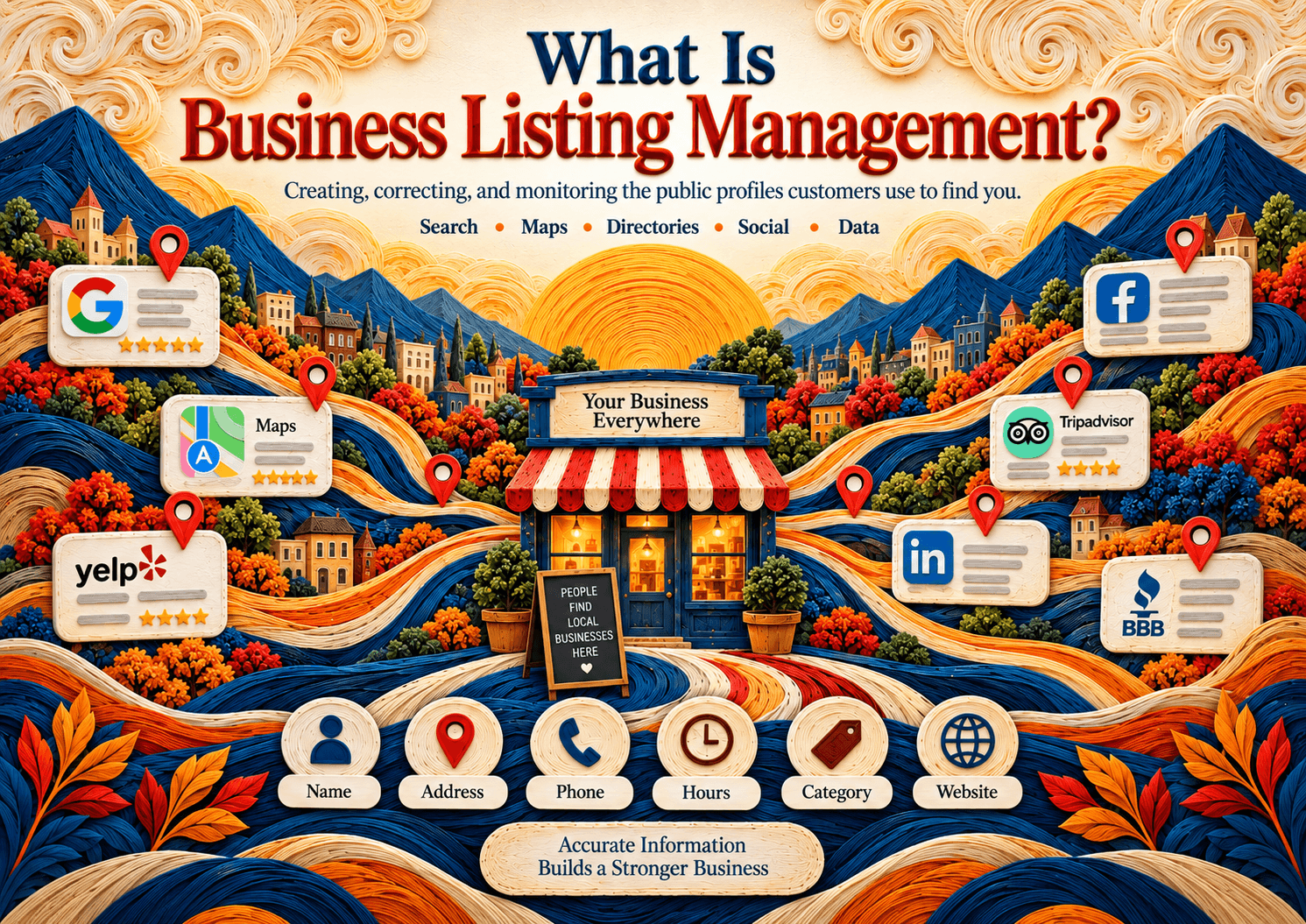
Business listing management keeps NAP, hours, categories, and attributes accurate across Google, maps, directories, and discovery surfaces for single- and multi-location brands.
Read article
Local listings management is the ongoing process of creating, updating, and keeping location data accurate across search engines, directories, maps, and review platforms. It is the same discipline as business listing management for US multi-location brands.
Read article
A local listings management budget should reflect the total cost of ownership, not just a per-location software fee. Include the platform or service cost, implementation, cleanup, internal labor, integrations, exception handling, reporting, and transition costs. Per-location pricing is useful, but it should be treated as only one part of the annual budget.
Read article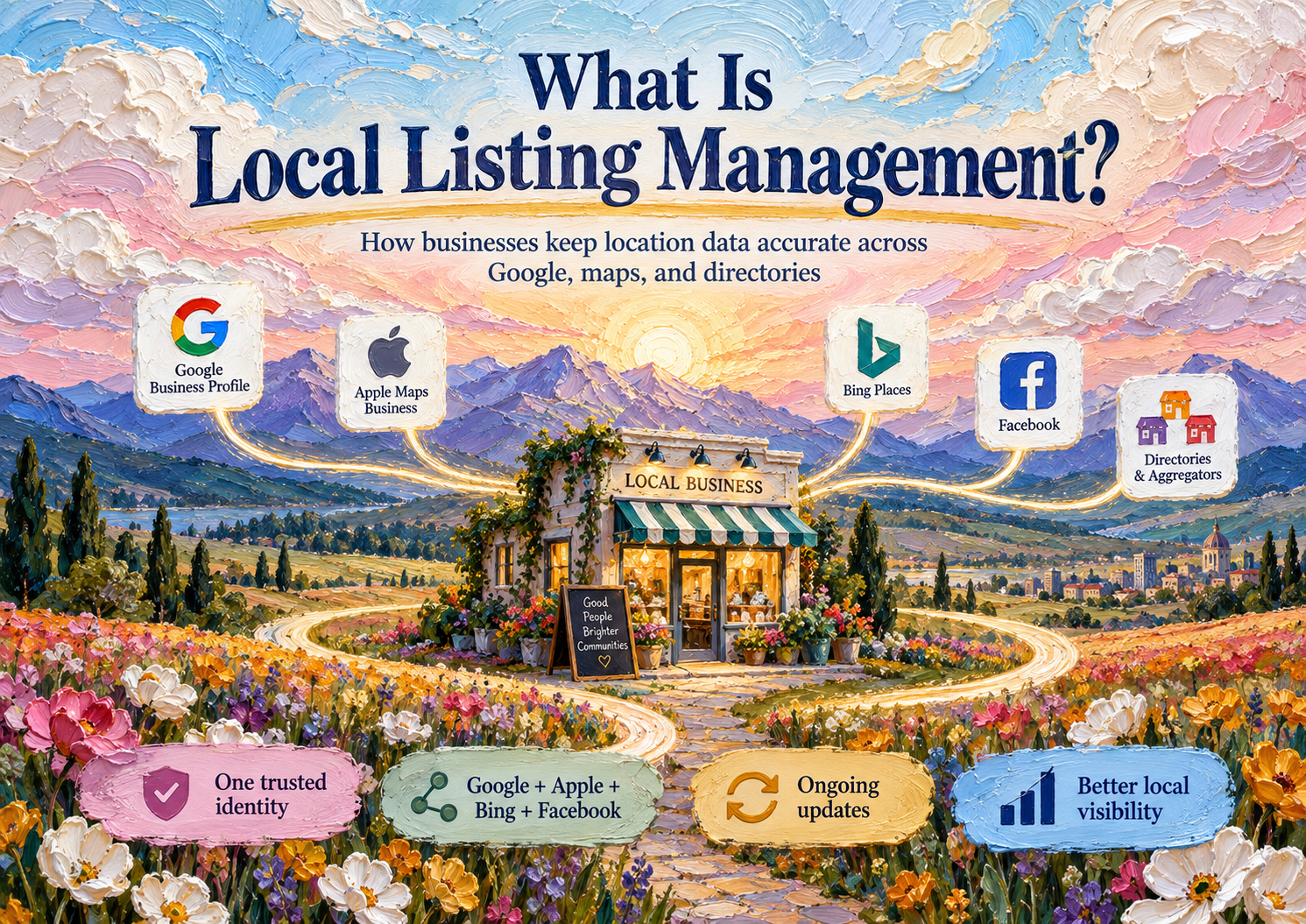
Keep the location facts that feed maps packs and AI answers consistent: monthly inventory, Tier 1 fixes, and verify loops inside local listing management.
Read articleThe proof to keep after publishing local listing changes: public place-card checks, timestamps, and tickets so submitted never equals done.
Read articleHow to publish holiday, event, and temporary hours to Google, Apple Maps, and Bing Places, then verify public place cards, without leaving stale open-now signals.
Read article
Google My Business management is the day-to-day practice of running Google Business Profile (Google renamed GMB to GBP): ownership, NAP and hours, categories, posts, photos, Q&A, reviews, and a repeatable cadence. It is the Google lane of business listing management.
Read articleGMB management services are managed Google Business Profile (formerly Google My Business) programs for US locations: NAP, hours, categories, posts, photos, Q&A, and review workflows. They sit inside broader local listing management and business listing management programs.
Read articleLocal listing management for franchise networks fails when nobody owns the source of truth. Split fields, approvals, and lifecycle events between franchisor and franchisee, then pick a platform that enforces that split. Business listing management follows the same ownership model across the network.
Read article
A business listings audit compares every public location record with an approved source of truth. The useful output is not a single accuracy percentage. It ranks mismatches by customer impact, ownership risk, navigation failures and duplicate exposure so multi-location teams can fix the problems that actually matter first.
Read article
A multi-location listings governance model locks high-risk NAP fields behind corporate approve-and-publish, lets local teams contribute hours and photos inside brand rules, and keeps a break-glass emergency path with a full audit trail. It is the operating system for location-profile changes.
Read article